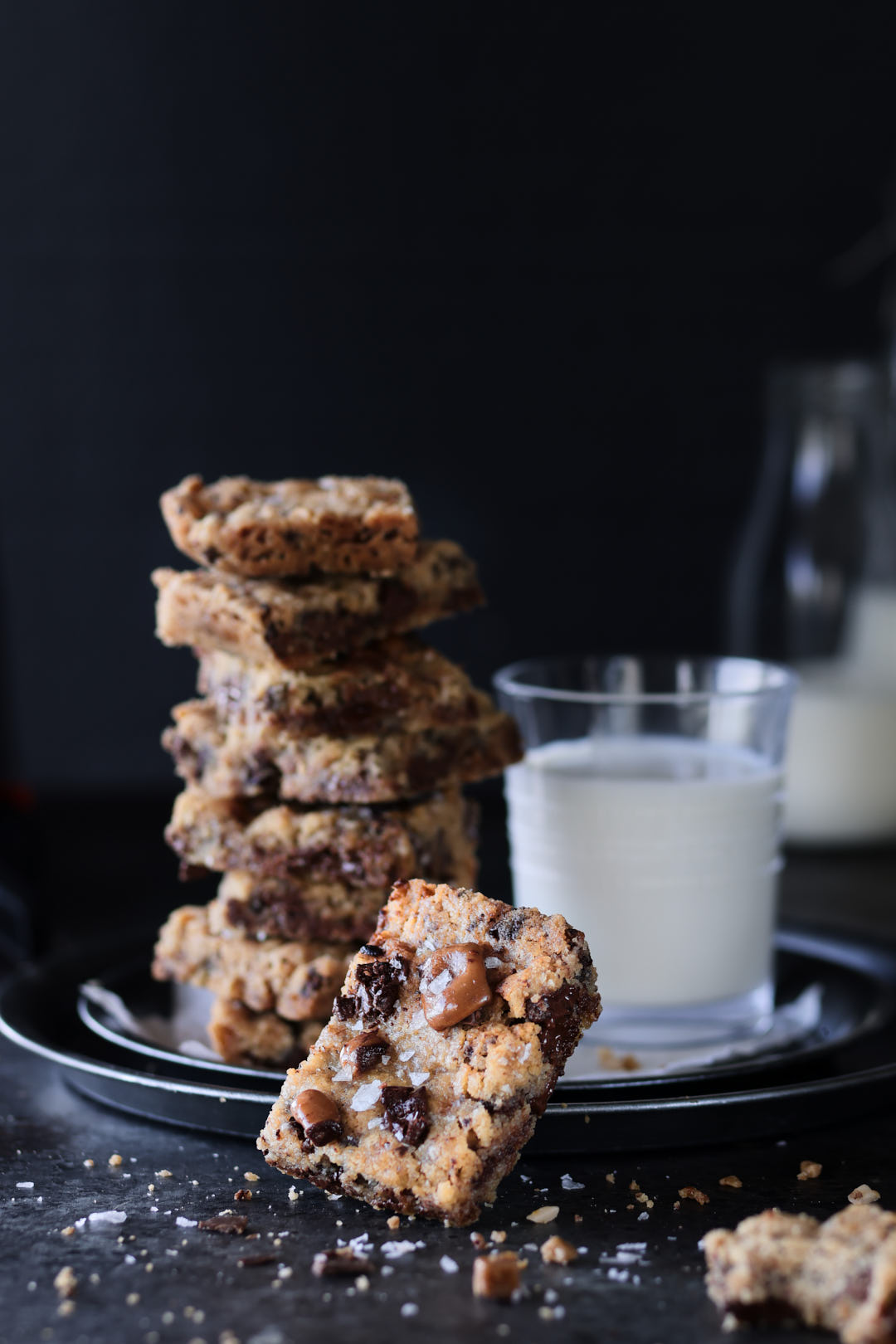
Looking for a fast and easy bar cookie recipe? Skor bar cookies skip the fuss of rolling or scooping cookie dough. Just press the dough into a pan, bake and cut into bars. Crispy on the edges, chewy in the center, they’re positively addictive.
I first learned to bake these cookies when I worked at David Wood Food Shop in Toronto. The recipe was created by Chef Karen Barnaby. We baked trays of these every day and they sold out before closing. They have become a family favourite in our house. We love them straight from the freezer. Any frozen cookie fans out there?
Tips for success:
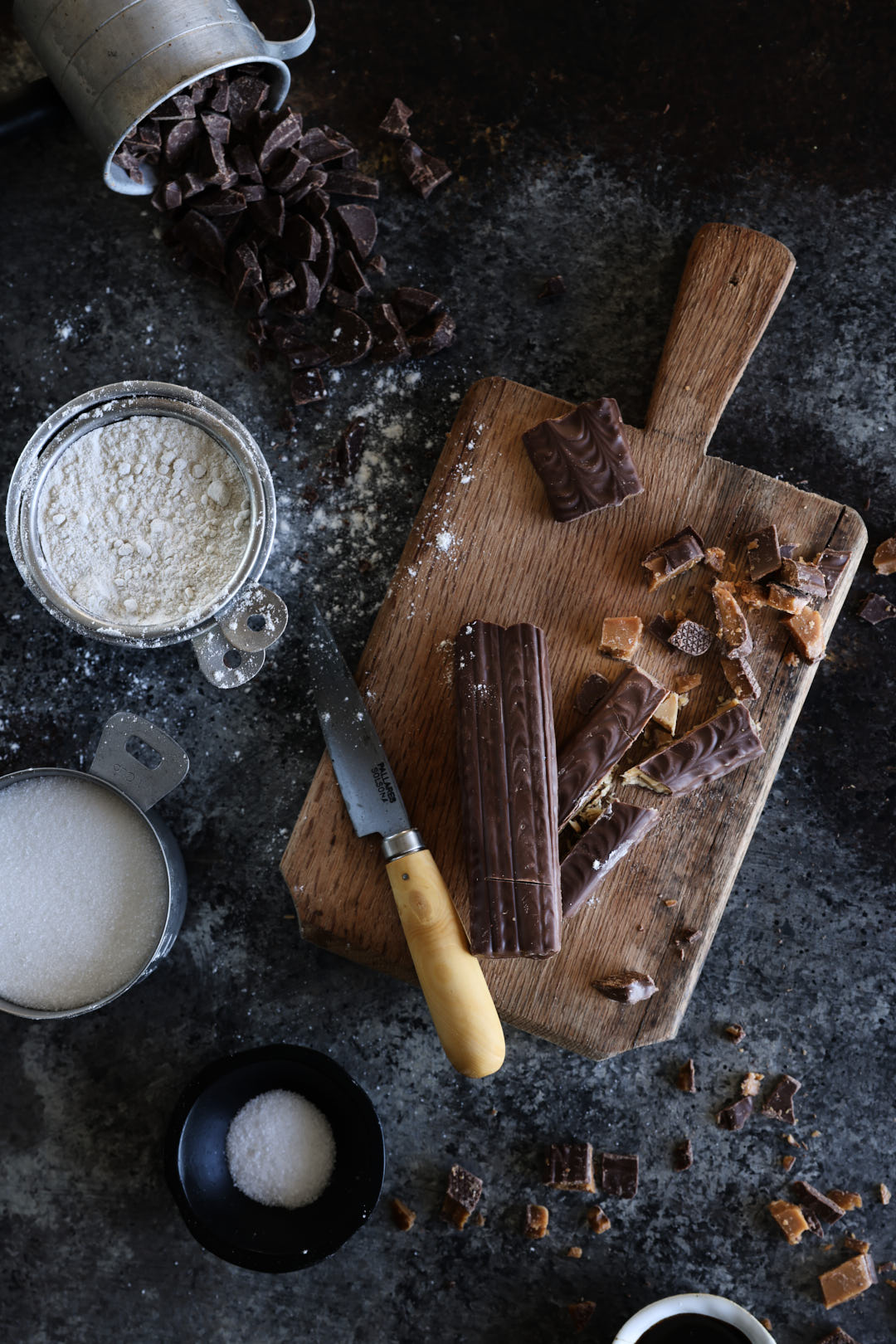
Skip the supermarket chocolate chips and splurge on good quality bittersweet chocolate. I love these from Valrhona, but any good quality bittersweet chocolate bar chopped up would work.
Remove your butter from the fridge about 30 minutes before starting. This is enough time to soften the butter and get it to the optimal temperature for creaming with the sugar. If you let the butter soften for too long the sugar crystals will not incorporate properly into the butter.
Use the back of a metal measuring cup to spread the dough evenly into the pan.
Score the cookies with a sharp knife into bars as soon as they come out of the oven. Then let cool completely in the pan before breaking into squares.
Check out the video to see how they come together:
Skor Bar Cookies
saltandserenity
Looking for a fast and easy bar cookie recipe? Skor bar cookies skip the fuss of rolling or scooping cookie dough. Just press the dough into a pan, bake and cut into bars.
170 grams bittersweet chocolate chopped into 1/4 inch pieces
1teaspoonflaky sea salt, like Maldonoptional
Instructions
Preheat oven to 325°F. Line a quarter sheet pan (9.5 x 13 inches) with parchment paper and set aside.
Using an electric mixer, cream the butter and sugar together until light and fluffy, about 5 minutes. Beat in vanilla and salt. Add flour and mix just until incorporated. Turn off mixer. Add Skor Bars and chocolate chunks and, using a spatula or wooden spoon, mix in by hand so the pieces do not get too small.
Dump dough into prepared pan. Using your hands, press dough evenly into prepared pan. Use the bottom of a metal measuring cup to smooth out and level dough. Sprinkle with flaky sea salt if desired. Bake for about 30-35 minutes until golden brown. Remove from oven and while still warm, score dough with a sharp knife. I usually do 4 rows down and 6 rows across for 24 cookies. Put pan on a rack to cool. When totally cool, turn out onto a cutting board, peel off parchment and finish cutting into squares.
Notes
This recipe was created by Chef Karen Barnaby. I have adapted it slightly by using a good quality bittersweet chocolate (my favourite are Valrhona Manjari feves, 64%) instead of supermarket chocolate chips and omitting the chopped pecans.
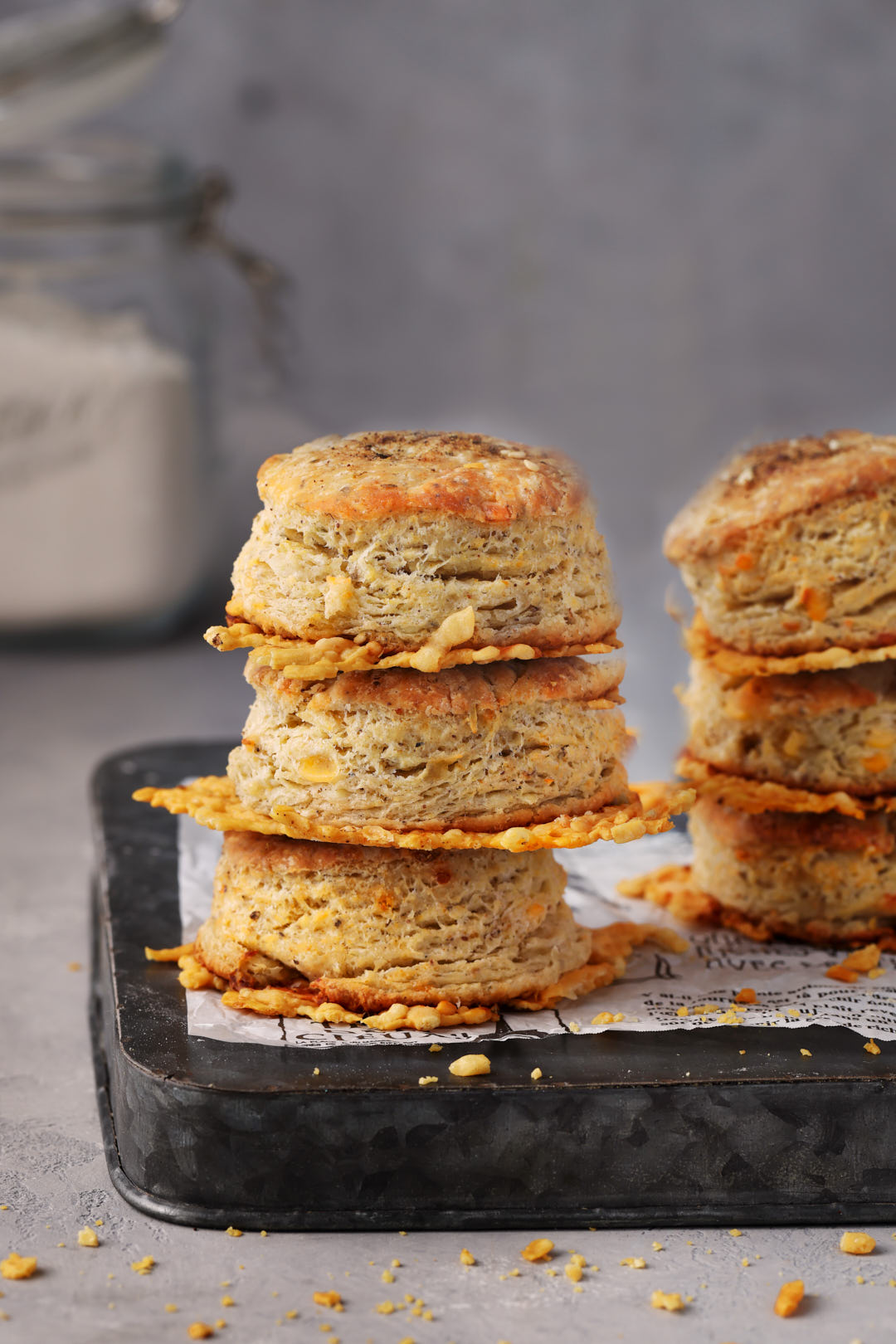
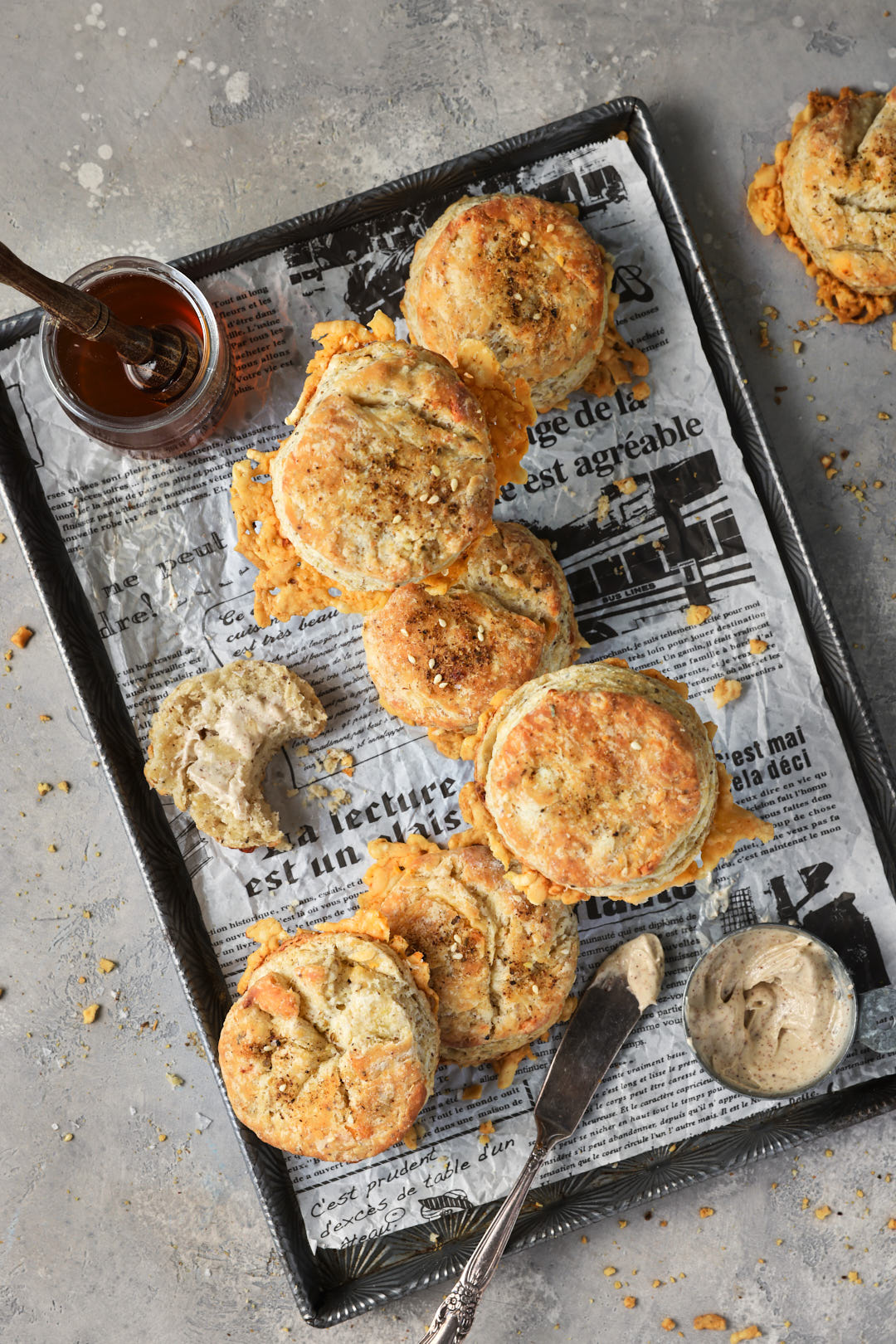
We can all agree that the best part of a grilled cheese sandwich are the bits of cheese that escape the bread and get all crispy around the edges. These biscuits get baked on a pile of shredded Gruyere cheese to form a lacy crispy cheese skirt around each biscuit. Texture heaven. I flavoured them with za’atar and extra Gruyere.
Here are some tips for success in making the ultimate flaky biscuits:
The type of flour you use makes a difference. All-purpose flour has a higher protein content than cake and pastry flour. More protein means more gluten, which gives the dough enough structure/body to create flaky layers and a nice crusty exterior. But using all-purpose flour exclusively led to a biscuit that was a bit tough. Cake and pastry flour, with its lower protein content, does not develop gluten as well as all-purpose flour. This results in light fluffy biscuits but those made exclusively with this flour did not rise as high or achieve the flaky layers I desired. The ideal was a 55%/45% (by weight) mix of all-purpose and cake and pastry flour.
Use both baking soda and baking powder. Baking soda has an alkaline base, which means it is not acidic. It needs acid to activate it and create carbon dioxide, which provides the leavening. Buttermilk plays the role of acid in these biscuits. It also adds a nice tangy flavour. Too much baking soda would completely neutralize that tangy flavour and leave behind unactivated baking soda which tastes metallic. Baking powder is made up of baking soda plus a dry acid. That additional acid will help give the biscuits their characteristic tang, plus provide extra leavening insurance.
The butter must be very cold. If you tend to have hot hands, I would suggest investing in a pastry blender. They are inexpensive and do a great job of working the butter into the flour. Make sure that you don’t totally work the butter into the flour. leave a few pea sized bits of butter. Butter is 20% water, so when those little knobs of butter hit the hot oven, they will melt and release steam, which creates pockets of air for maximum lift.
Don’t over knead the dough: You are not looking for a ball of dough that is as smooth as a baby’s bottom. After adding the buttermilk, the dough will look like a shaggy mess. That is correct. Just knead the dough 6-7 times until there is no dry flour visible. You will still see little knobs of butter in the dough.
Building layers is the key to flaky biscuits. Shape the dough into a rectangle, roughly 11×7 inches. I used a rolling pin to start and then used my bench scraper to help me straighten the edges. A ruler would also be an excellent tool for this. Next, fold the dough into thirds, as if you were folding a sheet of paper into thirds to fit into an envelope. Repeat this flattening and folding three more times and you have built in your layers.
Don’t twist the biscuit cutter. Press the cutter down into the dough and then lift it straight back up again. If you twist it, you seal off the edges of the dough, prohibiting the biscuits from rising evenly.
Give the biscuits a refrigerated 15 minute rest before baking. This gives the gluten time to relax, resulting in more tender biscuits and the butter can harden. If the butter is too soft, the biscuits will spread and slump more readily.
Here’s a video to show you how it all comes together.
Buttermilk Za’atar Cheese Skirt Biscuits
Biscuits baked on a bed of cheese for a lacy and crispy bottom skirt!
1/4teaspoonDiamond Crystal Kosher Saltor 1/8 teaspoon Morton's Kosher Salt
8gramsbaking powder
3gramsbaking soda
125gramsunsalted buttercut into 1/2 inch pieces and very well chilled
130 grams Gruyere cheesegrated and divided into 40 grams (to add to dough)and 90 grams (to place under biscuits)
8gramsZa'atar
220gramsbuttermilk
21gramshoney
Topping for biscuits
14gramsunsalted buttermelted
4 gramsZa'atar
Instructions
Stack 2 sheet pans together. Line the top sheet with parchment paper. Set aside. (Doubling the baking sheets prevents the biscuits from getting too dark on the bottom.)
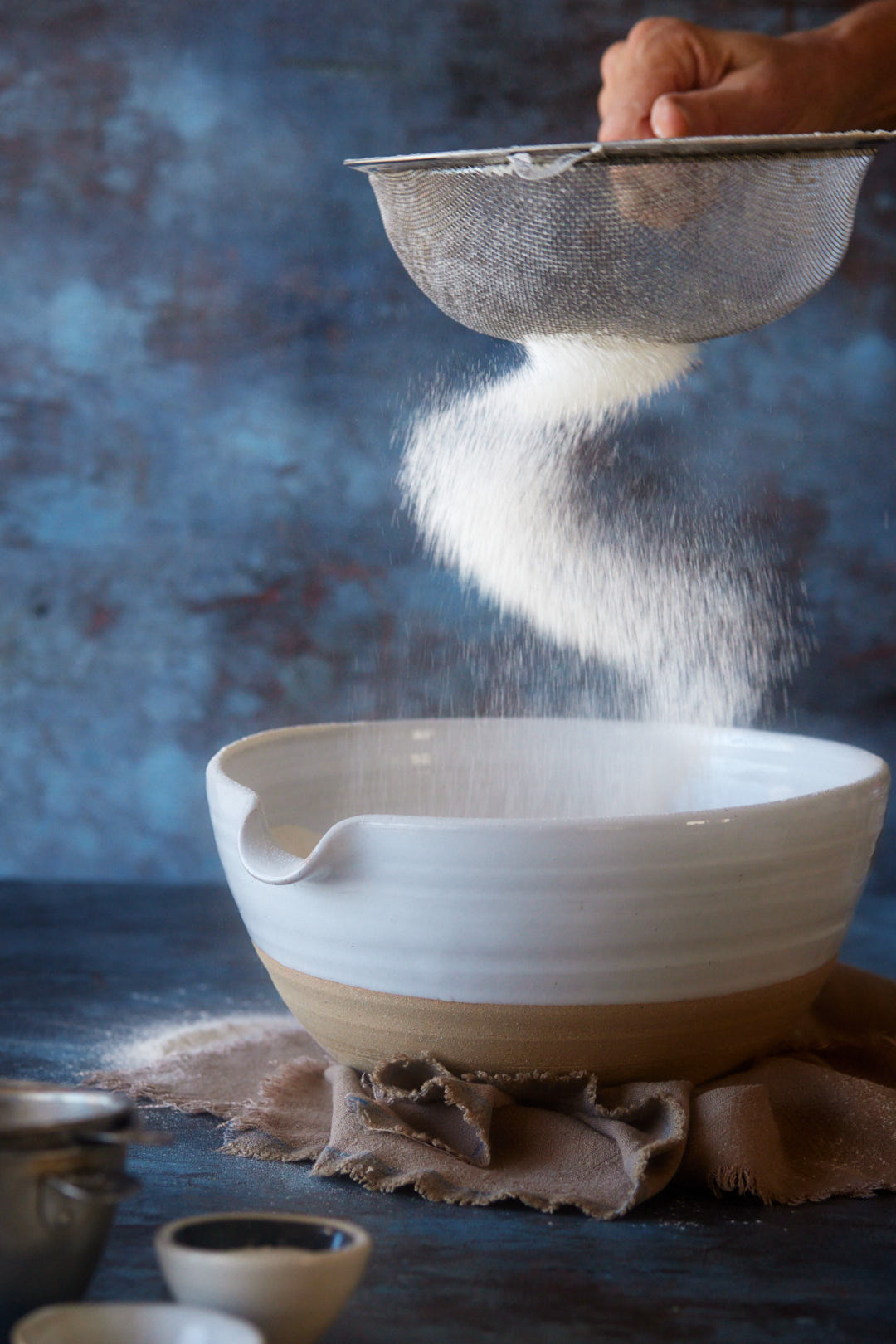
Sift the all-purpose flour, cake and pastry flour, salt, baking powder and baking soda into a large bowl. Add cold butter pieces to the bowl. Using a pastry blender, or 2 forks, cut the butter into the dry ingredients until the butter is the size of small peas. I do not recommend using your hands, as the heat from your fingers will melt the butter. You want the biscuit dough to have small flecks of butter that are not completely incorporated into the dry ingredients. Butter is about 20% water, so that when the biscuits hit the hot oven, these little bits of butter will release their moisture and create steam, which will help create flaky tall biscuits.
Add 40 grams grated Gruyere cheese and za'atar and briefly mix. Add the buttermilk and honey and, using a rubber spatula, stir together. Just stir until there are no dry patches of flour in the bowl. The dough will look like a shaggy mess. This is correct.
Lightly dust your counter with all-purpose flour. Dump the dough onto the floured work surface and gently knead together just to incorporate the remaining dry flour This should only take about 7 kneads.
Using a pastry scraper, bring the dough together into a rectangle, roughly 11×7 inches. Fold one side of the rectangle into the center, then fold the other side into the center. Imagine you are folding a sheet of paper into thirds to fit into an envelope.
Turn the dough horizontally. Gently roll or pat it into a 11×7 inch rectangle a second time. Repeat the letter fold again. Turn the dough horizontally one more time and gently roll or pat dough into a 11×7 inch rectangle a third time. Fold like a letter into thirds again, for a third fold. Repeat the patting and folding one last time, for a total of 4 folds.
Sprinkle the remaining 90 grams of grated Gruyere cheese into 8 piles on the parchment lined baking sheet, making sure they are about 2 inches apart.
Gently pat or roll the dough until the rectangle is about 1 inch thick. Cut dough into rounds with a 2½ inch biscuit or cookie cutter. Don’t twist the biscuit cutter when pressing into the dough. Just go straight down. If you twist the cutter, the biscuits will not rise as tall. Re-roll scraps until all the dough is used. You should have 8 biscuits. Place each biscuit on a mound of cheese, making sure cheese peeks out at the edges of the biscuit. Brush with melted butter and sprinkle with za'atar. Place baking sheet in fridge to chill for 15 minutes.
While biscuits are chilling, place oven rack in middle position and preheat oven to 425°F. Bake biscuits for 15-18 minutes, until golden brown and biscuits reach an internal temperature of 205°F-210°F using an instant read thermometer.
Let biscuits cool on baking sheet for at least 5minutes. Any leftover biscuits can be wrapped in plastic wrap and then popped into a freezer bag for freezing. Thaw slightly, split biscuits and toast in oven.
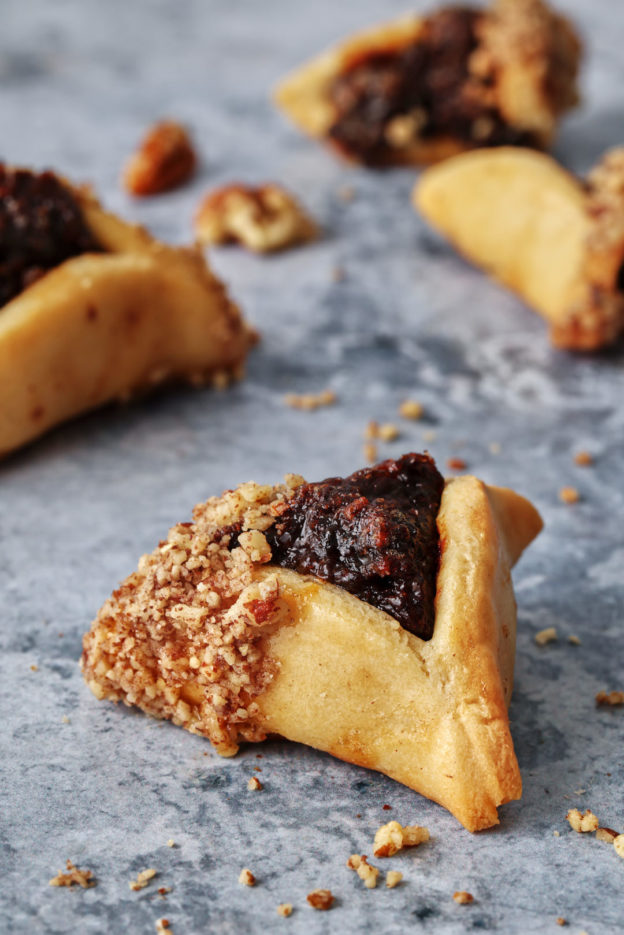
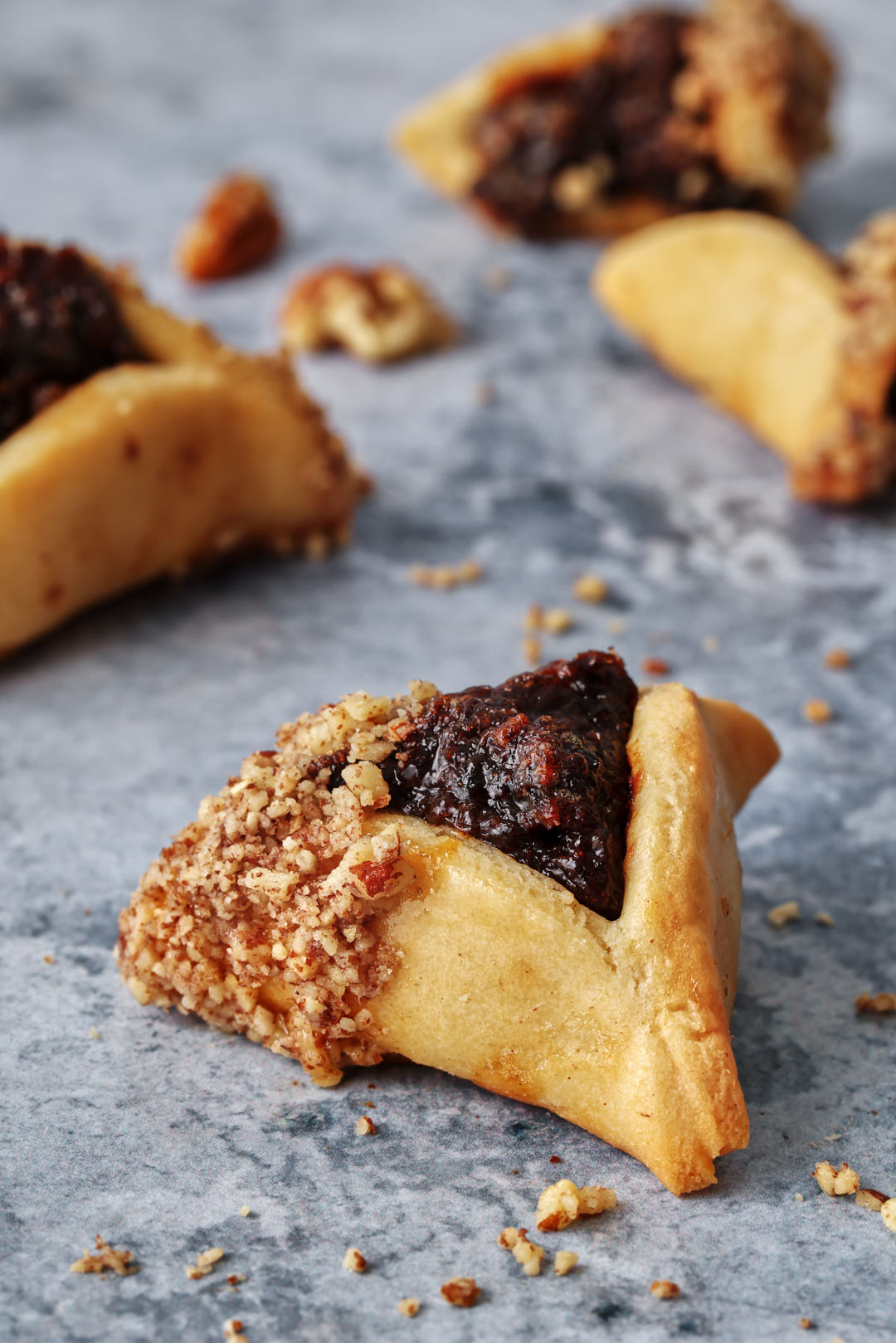
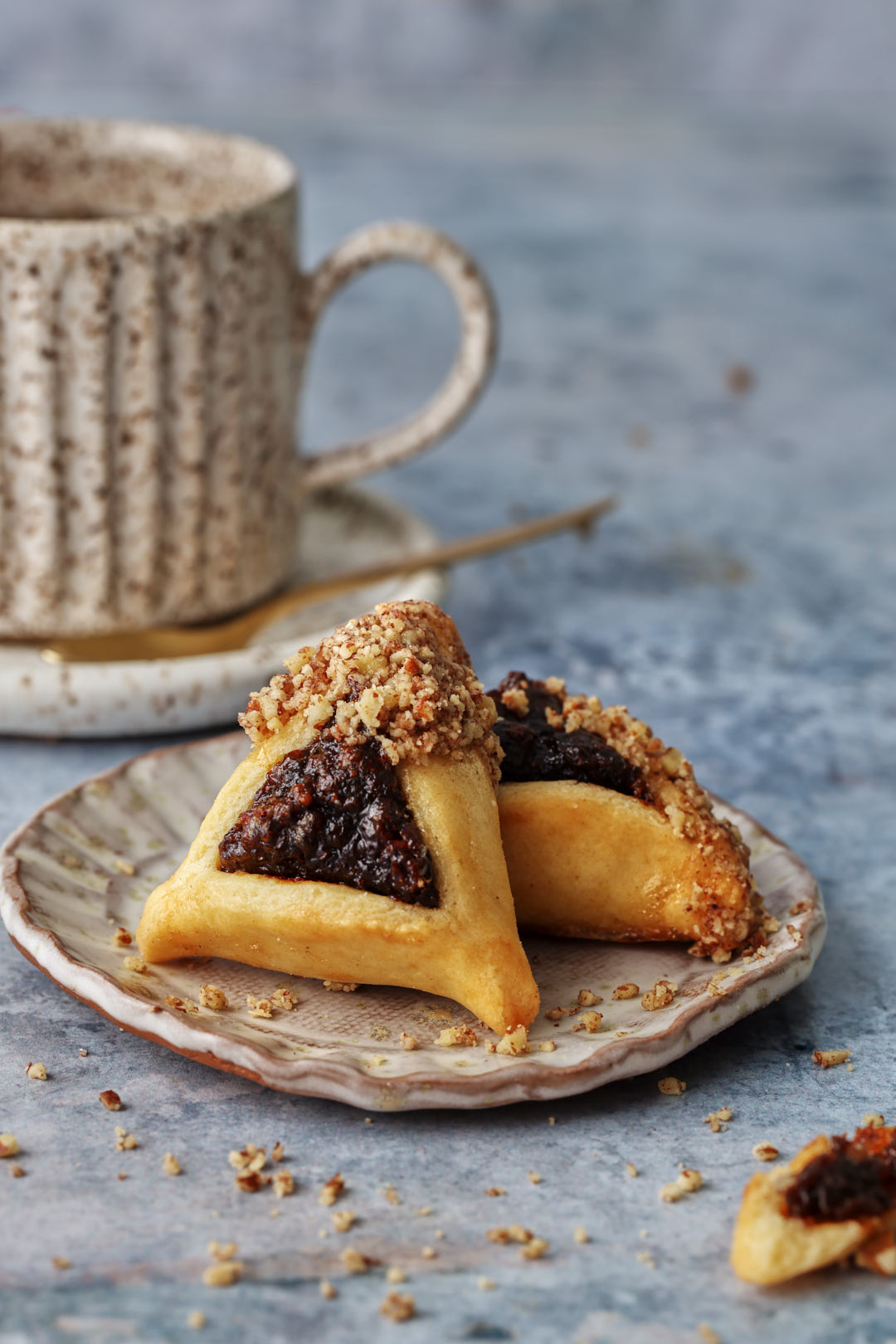
The Jewish holiday of Purim falls on Sunday March 24 this year. The traditional treat to eat on Purim are Hamentashen, a triangular shaped cookie. Created by my Aunt Carol, these are the very best hamentashen. Tender cookie dough encases a sweet golden raisin and prune filling. After baking, dip them in honey and chopped toasted pecans, for crunch.
If you need a primer on Purim, or just a laugh, check out this cute video from Mayim Bialik.
Growing up in Toronto, we celebrated Purim with hamentashen from Open Window Bakery. They were enormous, with a hard, crumbly cookie dough exterior. There were only two flavour options, prune or poppy-seed fillings. Life was simpler back then! My sisters and I fought over the poppy-seed ones. Mom, why did you even bother buying the prune ones?
After marriage, I was introduced to Ottawa-style hamentashen. Homemade! These were little triangles of tender dough filled with a prune and raisin filling, dipped in honey and walnuts. Talk about culture shock. My husband’s aunts, Jenny and Carol, supplied the family with their version of hamentashen. They really are the very best hamentashen. After Aunt Jenny died, Aunt Carol continued the tradition of making hamentashen. She would mail them, near and far, to all her nieces and nephews.
My beloved Aunt Carol died suddenly in 2018. I miss her dearly. She taught me how to bake hamentashen and many other important life skills. When I first moved to Ottawa, she took me under her wing and offered me lots of advice, such as “I know you kept your own name when you got married, but if you use our family name when you order from the kosher butcher, you’ll get better quality meat. “ Turns out she was right. She usually was.
I will do my best to carry on her tradition of sharing her delicious hamentashen with as many as I possibly can!
Aunt Carol’s Hamentashen
Traditional cookie served during the Jewish holiday of Purim. Tender cookie dough filled with a sweet prune and raisin filling. Dipped in honey and pecans for some crunch.
Make dough: In an electric mixer, mix eggs and sugar until smooth, about 3-4 minutes. Pour in oil and mix to combine. Sift together flour, baking powder and salt and add to mixer. Mix just until dough begins to come together.
Dump dough onto the counter and knead for about a minute. Divide dough into 2 pieces and roll each piece, between 2 sheets of parchment paper, to an 1/8 inch thickness. Chill rolled dough in fridge for one hour. (Dough will keep in fridge for 5days or can be frozen for up to a month.
Make filling: Combine all ingredients in the food processor and pulse until finely chopped, about 20 –25 pulses.
Preheat oven to 350°F. Use a round (2¾ -3 inch) cutter to to stamp out rounds, leaving as little space between them as possible so that you do not have too many scraps. Place rounds on parchment lined baking sheet, setting them 1½ inches apart. Set scraps aside.
Brush the edge of the circles with cool water. Spoon about 2 teaspoons of the filling into the center of each circle. Fold up three sides of the dough against the filling, forming a triangular shape. Pinch the edges and corners gently so that the shape holds together. Repeat with remaining filling and dough. Scraps can be rerolled and chilled for at least 30 minutes before cutting and baking more hamentashen.
Brush unbaked hamentashen with lightly beaten egg white. Before baking, add a second baking sheet under hamentashen. The double baking sheets will prevent the bottom of the hamentashen from getting too brown, before the tops and sides are done. Bake the hamentashen, rotating baking sheet halfway through, until golden, 15-16 minutes.
Once the hamentashen have cooled, dip one edge of them in honey and then into the chopped pecans. Hamentashen will keep well in an airtight container, for about a week. For longer storage, they can be frozen for up to 2 months.
Traditional cookie served during the Jewish holiday of Purim. Tender cookie dough filled with a sweet prune and raisin filling. Dipped in honey and pecans for some crunch.
Make dough: In an electric mixer, mix eggs and sugar until smooth, about 3-4 minutes. Pour in oil and mix to combine. Sift together flour, baking powder and salt and add to mixer. Mix just until dough begins to come together.
Dump dough onto the counter and knead for about a minute. Divide dough into 2 pieces and roll each piece, between 2 sheets of parchment paper, to an 1/8 inch thickness. Chill rolled dough in fridge for one hour. (Dough will keep in fridge for 5days or can be frozen for up to a month.
Make filling: Combine all ingredients in the food processor and pulse until finely chopped, about 20 –25 pulses.
Preheat oven to 350°F. Use a round (2¾ -3 inch) cutter to to stamp out rounds, leaving as little space between them as possible so that you do not have too many scraps. Place rounds on parchment lined baking sheet, setting them 1½ inches apart. Set scraps aside.
Brush the edge of the circles with cool water. Spoon about 2 teaspoons of the filling into the center of each circle. Fold up three sides of the dough against the filling, forming a triangular shape. Pinch the edges and corners gently so that the shape holds together. Repeat with remaining filling and dough. Scraps can be rerolled and chilled for at least 30 minutes before cutting and baking more hamentashen.
Brush unbaked hamentashen with lightly beaten egg white. Before baking, add a second baking sheet under hamentashen. The double baking sheets will prevent the bottom of the hamentashen from getting too brown, before the tops and sides are done. Bake the hamentashen, rotating baking sheet halfway through, until golden, 15-16 minutes.
Once the hamentashen have cooled, dip one edge of them in honey and then into the chopped pecans. Hamentashen will keep well in an airtight container, for about a week. For longer storage, they can be frozen for up to 2 months.
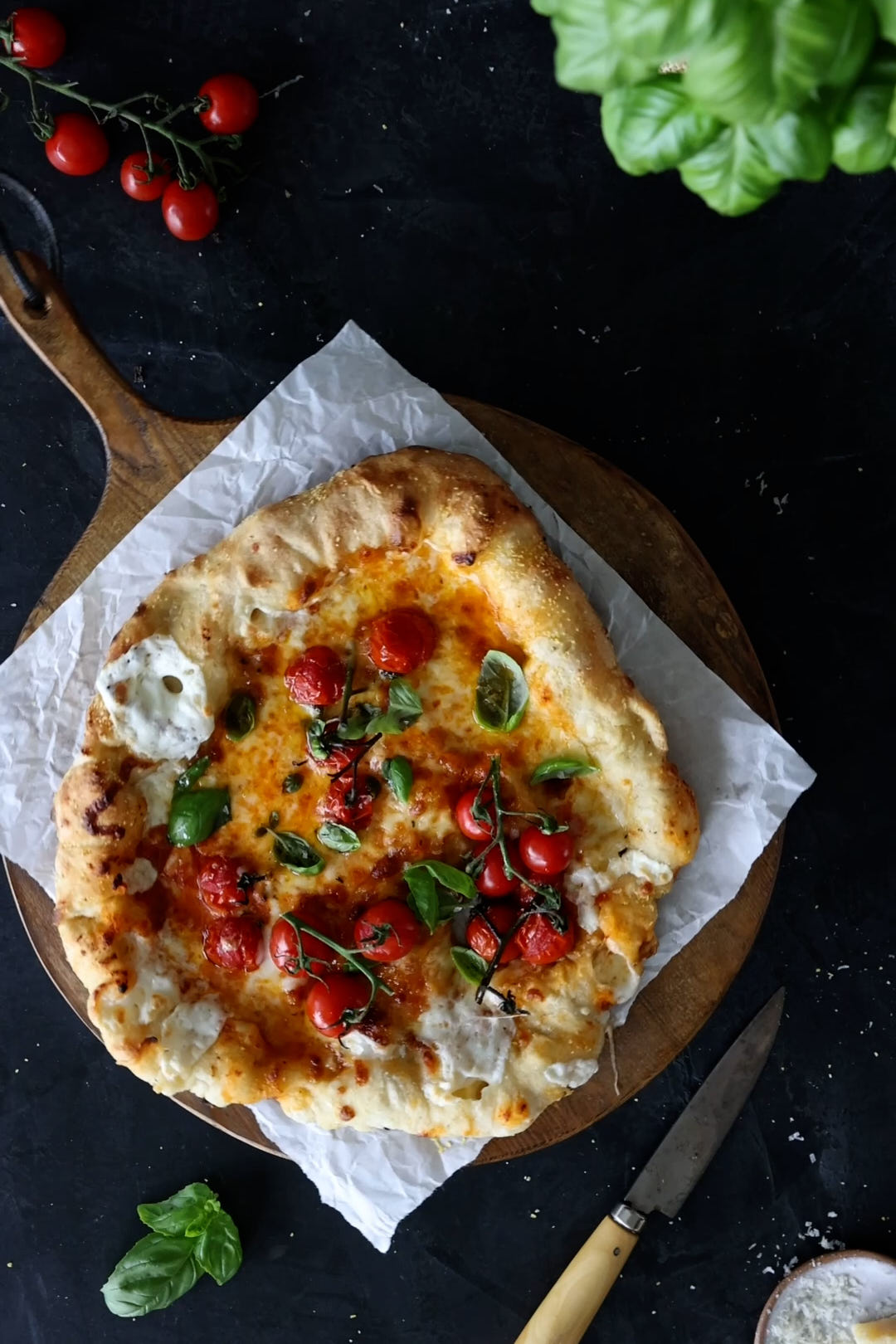
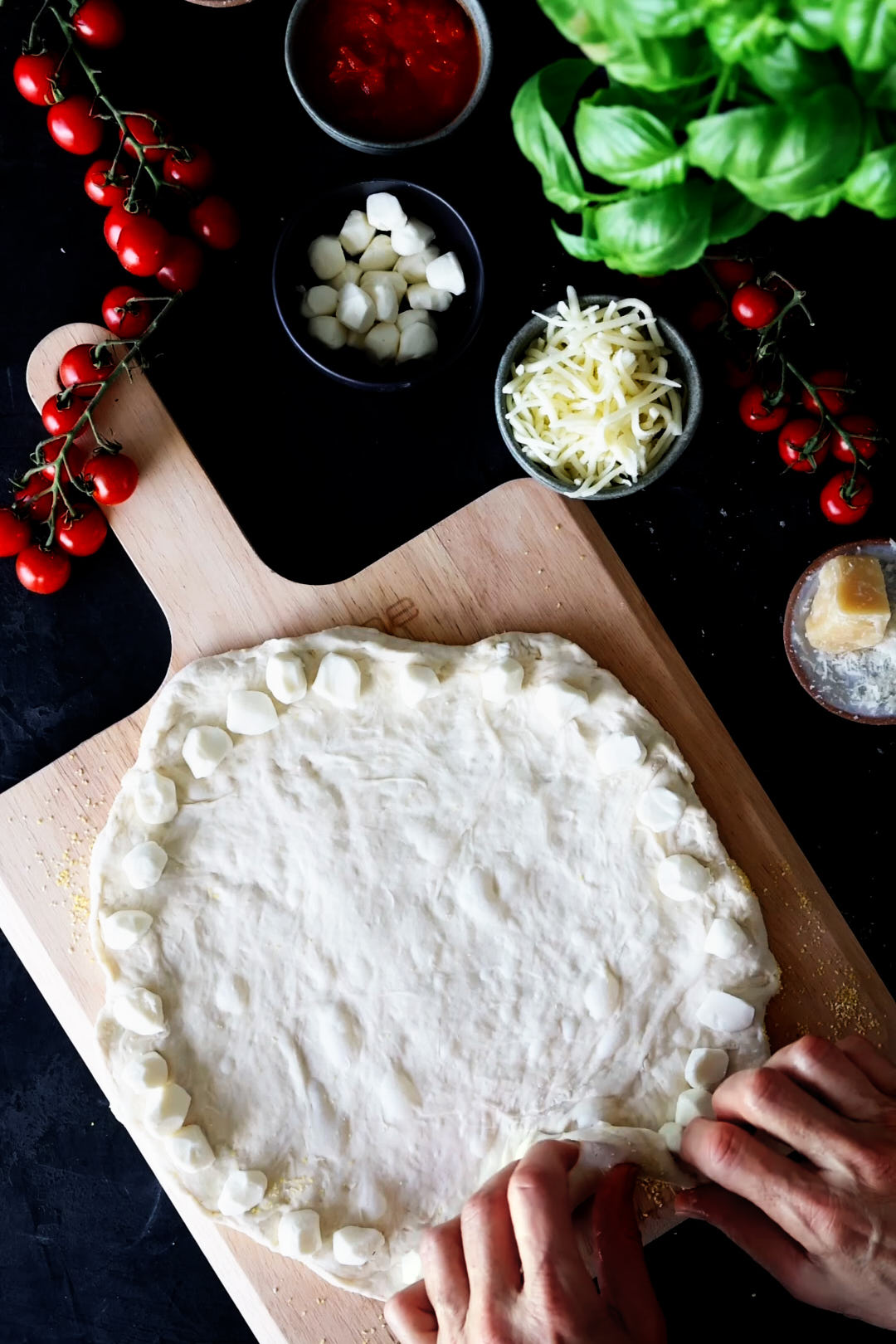
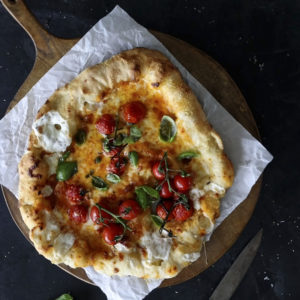
This is my twist on a classic Margherita pizza. I stuffed the crust with fresh mozzarella cheese. Because more cheese is never a bad idea, right? I used fresh pearl mozzarella. If you can’t find the little balls, just dice up some regular fresh mozzarella into 1/4 inch pieces.
Fresh mozzarella is sold in small plastic containers or bags filled with water or whey. It is quite perishable and should be used within a few days. Regular, or “low moisture” mozzarella is sold in a block or ball, tightly wrapped without any liquid. it has a firmer texture and is more rubbery than fresh mozzarella. That is what the pizza gets topped with and what gives you that gorgeous cheese pull.
Here’s how it all comes together.
For the dough, you can certainly purchase ready made pizza dough. But if you want something truly spectacular, try Jim Lahey’s no knead pizza dough (recipe below). You need to plan a day ahead if you want to make the dough, but it’s worth it.
I have a little pizza oven that I can put on my BBQ. But I have also made pizza successfully in my regular oven. I would suggest getting a baking steel or pizza stone to bake the pizza on. I prefer the durability and performance of the baking steel, but have had good results with both.
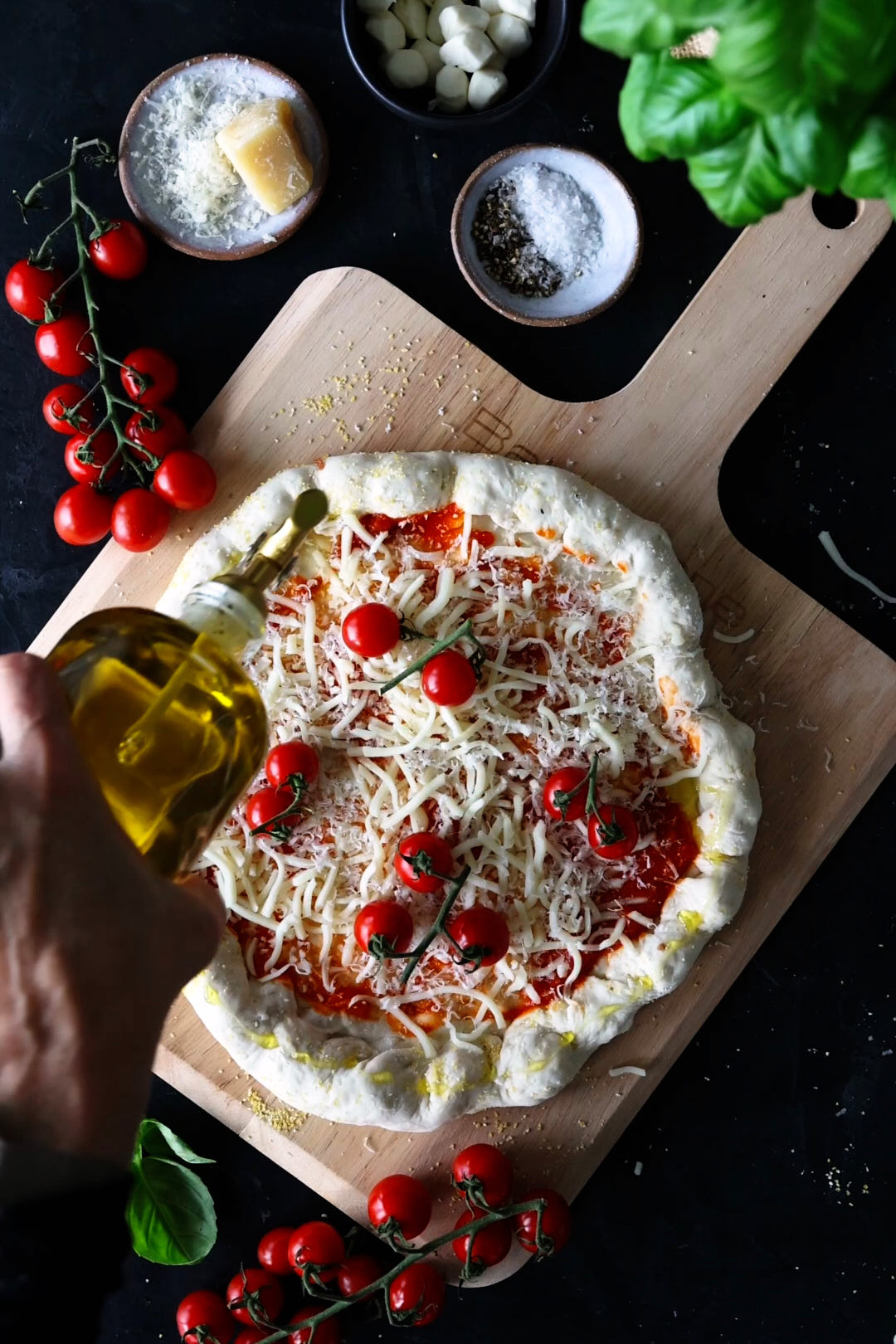
A little drizzle of olive oil on the crust before baking ensures a golden crust.
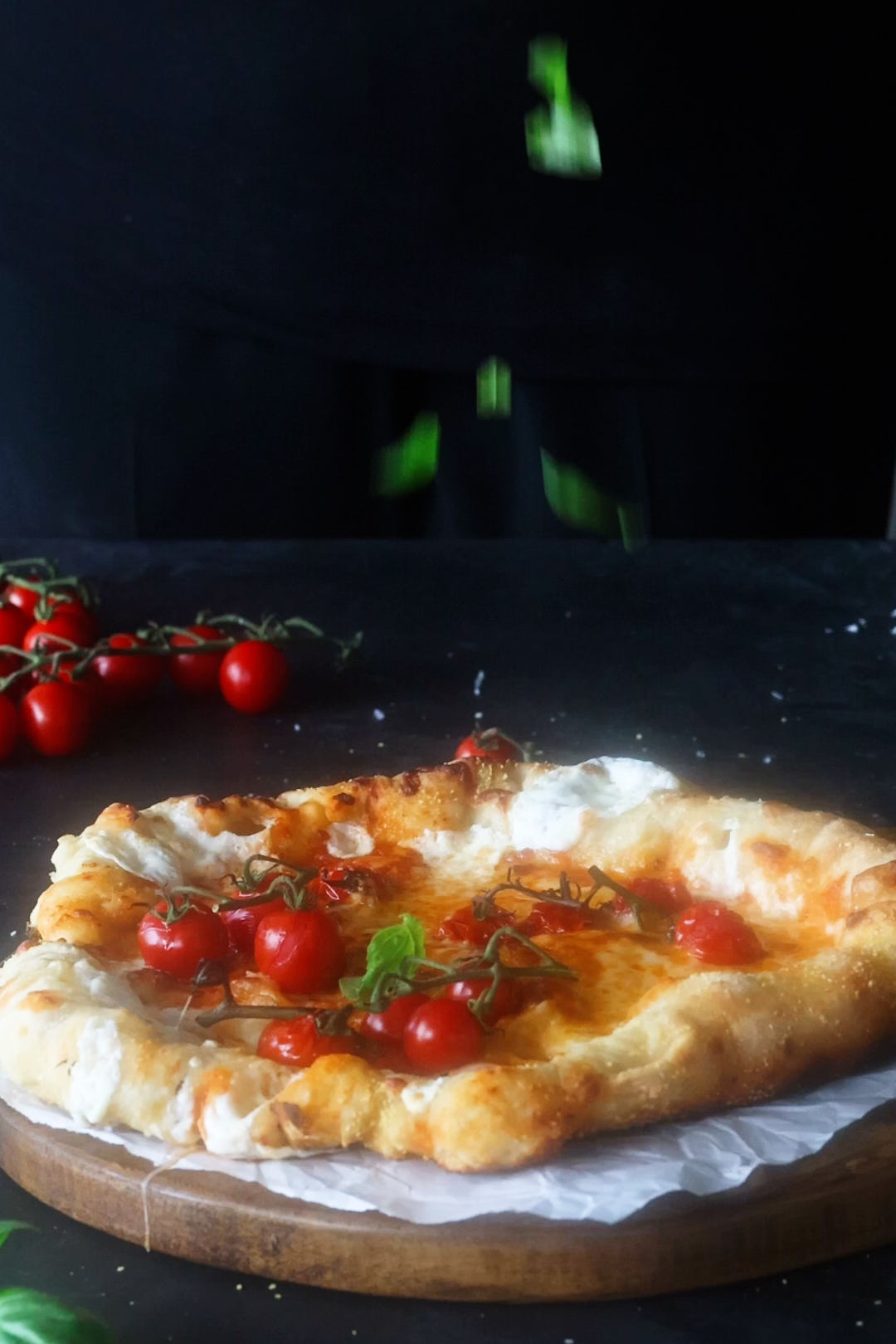
Add the fresh basil after baking so that it does not wilt and go black.
Stuffed Crust Margherita Pizza
saltandserenity
A twist on the classic tomato sauce, mozzarella and fresh basil pizza. I stuffed the crust with fresh mozzarella, because more cheese is always a good idea, right?
225gramsfresh pearl mozzarella or regular fresh mozzarella, cut into 1/4 inch pieces
130 gramsmarinara sauceI like Rao's brand
150 grams low moisture mozzarella shredded
25gramsParmesan cheeseshredded
1Tablespoonextra virgin olive oil
1 teaspoonsflaky sea salt
15leavesfresh basiljulienned
Instructions
Preheat your pizza oven if you have one or, set a pizza stone on the bottom rack of the oven and preheat the oven to 500°F, allowing at least 45 minutes for the stone to heat.
Flour your work surface and scrape the dough out of the bowl. Divide it into 3 equal parts and shape them. For each pizza, start with the right side of the dough and pull it toward the center; then do the same with the left, then the top, then the bottom. (The order doesn’t actually matter; what you want is four folds.) Shape each portion into a round and turn seam side down. Mold the dough into a neat circular mound. The mounds should not be sticky; if they are, dust with more flour. Cover with plastic wrap and let sit for a few minutes.
Shape the pizzas, one at a time. On a lightly floured surface, pressing down with floured fingertips, shape the dough into a small, flat disk. Work from the center and push the dough outward, spreading your fingers as you make the disc larger. Keep the rim a bit thicker. Pick up the dough and move your hands along the edges, allowing gravity to pull the dough into a 12-inch circle. This method has been nicknamed, “Driving the Bus”.
Lay a sheet of parchment paper, slightly larger than the pizza, on the counter and sprinkle it with cornmeal. Place dough on parchment paper. Pull rim of dough to flatten it a bit more. Arrange 1/3 of fresh mozzarella around the edges of the crust, leaving a 3/4-inch space. Fold the edges of the dough over the cheese, pinching down to seal.
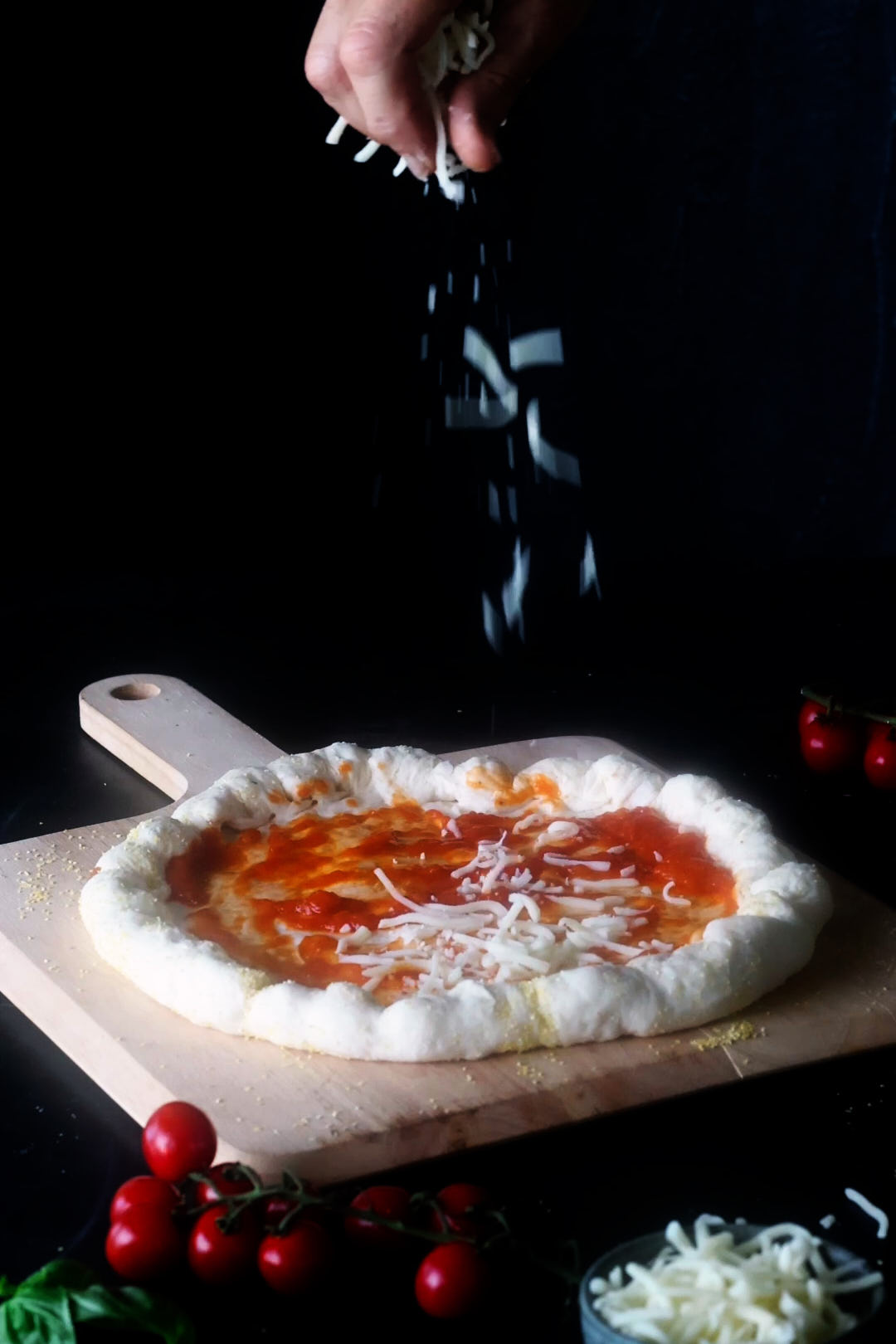
Top pizza with 1/3 of sauce, low moisture mozzarella and Parmesan cheese. Drizzle crust with olive oil and sprinkle with flaky salt.
Transfer pizza, still on parchment paper, to a pizza peel. Slide onto the pizza stone and bake for 3 minutes. Using the pizza peel, slide pizza out and, carefully, using tongs, pull the parchment paper out and discard. The parchment paper is just used to make sliding the pizza into the oven easier. If you leave it in for too long, it will burn. Now that the bottom of the pizza is partially cooked, it will slide easily back onto the stone. Continue baking until cheese is melted with some browned spots and crust is golden brown and puffed, 11 to 13 minutes more if you are using your oven. If you have a BBQ pizza oven, it will cook quicker, maybe 5-6 minutes in total.
Remove from oven. Repeat with remaining 2 pizzas. It is best to shape and top them just before baking.
16gramsDiamond Crystal Kosher saltor 8 grams Mortons Kosher salt
350 gramswaterroom temperature
Instructions
In a medium bowl, thoroughly blend the flour, yeast, and salt.Add the water and, with a wooden spoon, a Danish whisk, or your hands, mix thoroughly.
Cover the bowl with plastic wrap or a kitchen towel and allow it to rise at room temperature (about 72°F) for 18 hours or until it has more than doubled. It will take longer in a chilly room and less time in a very warm one.
Are you as disappointed as me when you order pizza for home delivery? It never tastes as good as when you get it fresh from the oven. It’s my mission to get you to try making your own at home.
What you will need to make pizza at home:
I have a little pizza oven that I can put on my BBQ. But I have also made pizza successfully in my regular oven. I would suggest getting a baking steel or pizza stone to bake the pizza on. I prefer the durability and performance of the baking steel, but have had good results with both.
A pizza peel. A wooden handle and stainless steel body is a good option.
Roast your veggie toppings before adding to the pizza:
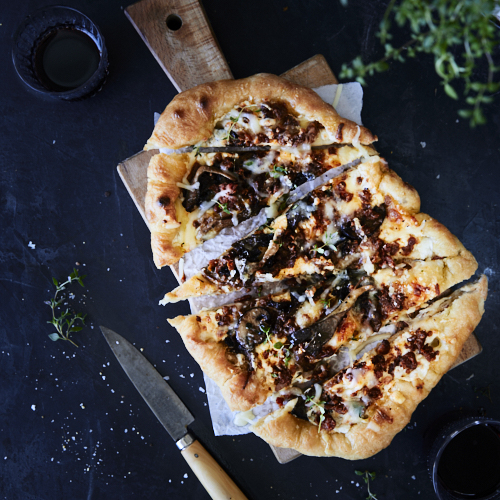
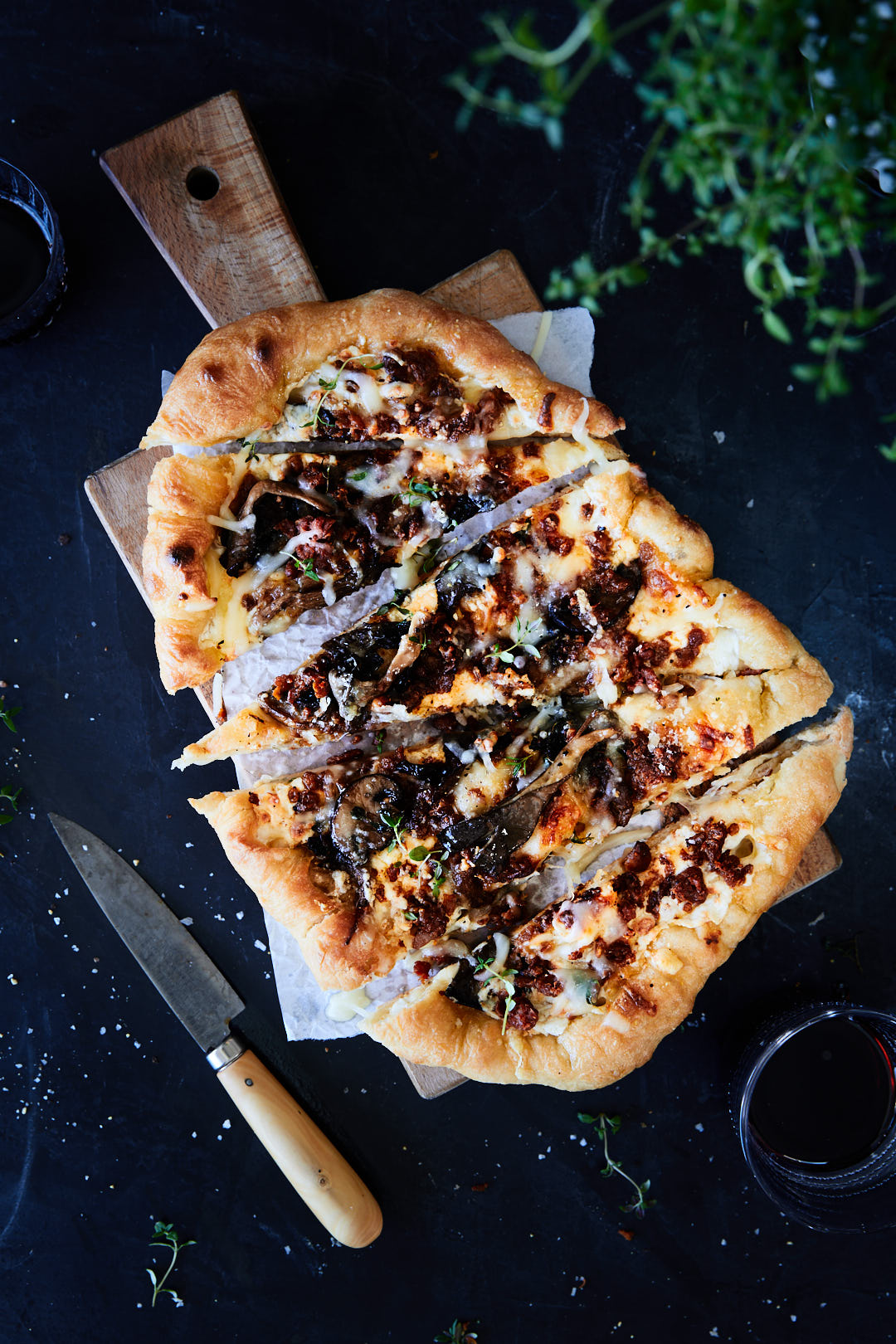
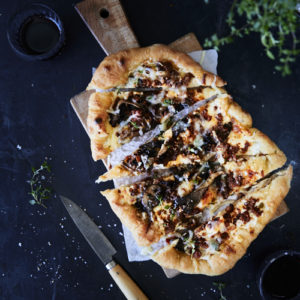
I decided to make a “white” pizza, meaning no tomato sauce. Wild mushrooms, spicy Italian sausage and cheese are a great flavour combination. I like to roast the mushrooms in the oven before topping the pizza. Mushrooms have a very high water content, and if you put them onto the pizza raw, they will release all their juices and make the pizza soggy. I used a mix of cremini (brown button mushrooms) and oyster mushrooms. Olive oil, salt, pepper and a bit of fresh thyme go onto the mushrooms before a 15 minute roast in a hot oven.
A dough discussion:
For the dough, you can certainly purchase ready made pizza dough. But if you want something truly spectacular, try Jim Lahey’s no knead pizza dough (recipe below). You need to plan a day ahead if you want to make the dough, but it’s worth it.
I don’t use a rolling pin on pizza dough to shape it. I start with a ball of dough and gently press it into a round or oval shape. Then I use gravity and hold the dough like a steering wheel, turning it so it stretches. You can see the technique in the video.
Difference between fresh mozzarella and regular (low moisture) mozzarella:
Because more cheese is never a bad idea, I decided to make this a stuffed crust pizza using fresh pearl mozzarella balls. If you can’t find the little balls, just dice up some regular fresh mozzarella into 1/4 inch pieces. Make sure press firmly as you seal in the cheese as you go around the rim of the crust.
Just a note on the difference between fresh mozzarella and regular mozzarella. Fresh mozzarella is sold in small plastic containers or bags filled with water or whey. It is quite perishable and should be used within a few days.
Regular, also called “low moisture” mozzarella is sold in a block or ball, tightly wrapped without any liquid. it has a firmer texture and is more rubbery than fresh mozzarella. It is ideal to be used as a pizza topping or in lasagna.
I opted to use Fontina cheese on top of this pizza. Fontina has a nutty flavour profile that pairs well with the roasted mushrooms. I also added some ricotta for creaminess. To keep my pizza vegetarian, I used a plant based spicy Italian sausage, that I browned before adding to the pizza.
Wild Mushroom and Sausage Stuffed Crust Pizza
saltandserenity
A white pizza topped with ricotta, fontina, spicy Italian sausage and roasted mushrooms. Stuffed crust for added cheese!
250 gramsmushroomsI used a mix of cremini and oyster
2Tablespoonsolive oil
1/2 teaspoon Diamond Crystal Kosher Salt
1/4 teaspoon black pepper
3sprigsfresh thymeleaves stripped from stems
Pizza toppings
100gramsspicy Italian sausagemeat or plant based, casing removed
225 gramsfresh pearl mozzarellaor regular fresh mozzarella, cut into 1/4 inch pieces
150 gramsricotta cheese
75 gramsfontina cheeseshredded
75 grams low moisture mozzarella cheeseshredded
10 gramsParmesan cheesegrated
For finishing pizza
1 teaspoon olive oil
1/2 teaspoonflaky sea salt
Instructions
Preheat oven to 400°F. Slice cremini mushrooms into 1/4 inch thick slices. Tear oyster mushrooms in half. Place mushrooms on a baking sheet. Drizzle with olive oil, sprinkle with salt and pepper and thyme leaves. Mix mushrooms with your clean hands until they are coated in oil and seasonings. Roast for 12-15 minutes until browned and a little bit crispy around the edges.
Preheat your pizza oven if you have one or, set a pizza stone on the bottom rack of the oven and preheat the oven to 500°F, allowing at least 45 minutes for the stone to heat.
Flour your work surface and scrape the dough out of the bowl. Divide it into 3 equal parts and shape them. For each pizza, start with the right side of the dough and pull it toward the center; then do the same with the left, then the top, then the bottom. (The order doesn’t actually matter; what you want is four folds.) Shape each portion into a round and turn seam side down. Mold the dough into a neat circular mound. The mounds should not be sticky; if they are, dust with more flour. Cover with plastic wrap and let sit for a few minutes.
Heat medium sized skillet over medium high heat. Add sausage and crumble with potato masher or wooden spoon. Continue cooking until sausage is browned and fully cooked.
Shape the pizzas, one at a time. On a lightly floured surface, pressing down with floured fingertips, shape the dough into a small, flat disk. Work from the center and push the dough outward, spreading your fingers as you make the disc larger. Keep the rim a bit thicker. Pick up the dough and move your hands along the edges, allowing gravity to pull the dough into a 12-inch circle. This method has been nicknamed, “Driving the Bus”.
Lay a sheet of parchment paper, slightly larger than the pizza, on the counter and sprinkle it with cornmeal. Place dough on parchment paper. Pull rim of dough to flatten it a bit more. Arrange 1/3 of fresh mozzarella around the edges of the crust, leaving a 3/4-inch space. Fold the edges of the dough over the cheese, pinching down to seal.
Top pizza with 1/3 of ricotta, fontina and low moisture mozzarella. Scatter sausage over cheese. Top with 1/3 of mushrooms. Drizzle with olive oil and sprinkle with flaky salt.
Transfer pizza, still on parchment paper, to a pizza peel. Slide onto the pizza stone and bake for 3 minutes. Using the pizza peel, slide pizza out and, carefully, using tongs, pull the parchment paper out and discard. The parchment paper is just used to make sliding the pizza into the oven easier. If you leave it in for too long, it will burn. Now that the bottom of the pizza is partially cooked, it will slide easily back onto the stone. Continue baking until cheese is melted with some browned spots and crust is golden brown and puffed, 11 to 13 minutes more if you are using your oven. If you have a BBQ pizza oven, it will cook quicker, maybe 5-6 minutes in total.
Remove from oven. Repeat with remaining 2 pizzas. It is best to shape and top them just before baking.
Notes
You can make your own pizza dough or just use store bought dough for this recipe. I love Jim Lahey’s no knead pizza dough recipe. If you decide to make Jim’s recipe, plan ahead. Make the dough the day before you want to make the pizza. You will need a pizza stone for your oven or a portable pizza oven for your BBQ. A wooden or metal pizza peel is also essential.
16gramsDiamond Crystal Kosher saltor 8 grams Mortons Kosher salt
350 gramswaterroom temperature
Instructions
In a medium bowl, thoroughly blend the flour, yeast, and salt.Add the water and, with a wooden spoon, a Danish whisk, or your hands, mix thoroughly.
Cover the bowl with plastic wrap or a kitchen towel and allow it to rise at room temperature (about 72°F) for 18 hours or until it has more than doubled. It will take longer in a chilly room and less time in a very warm one.
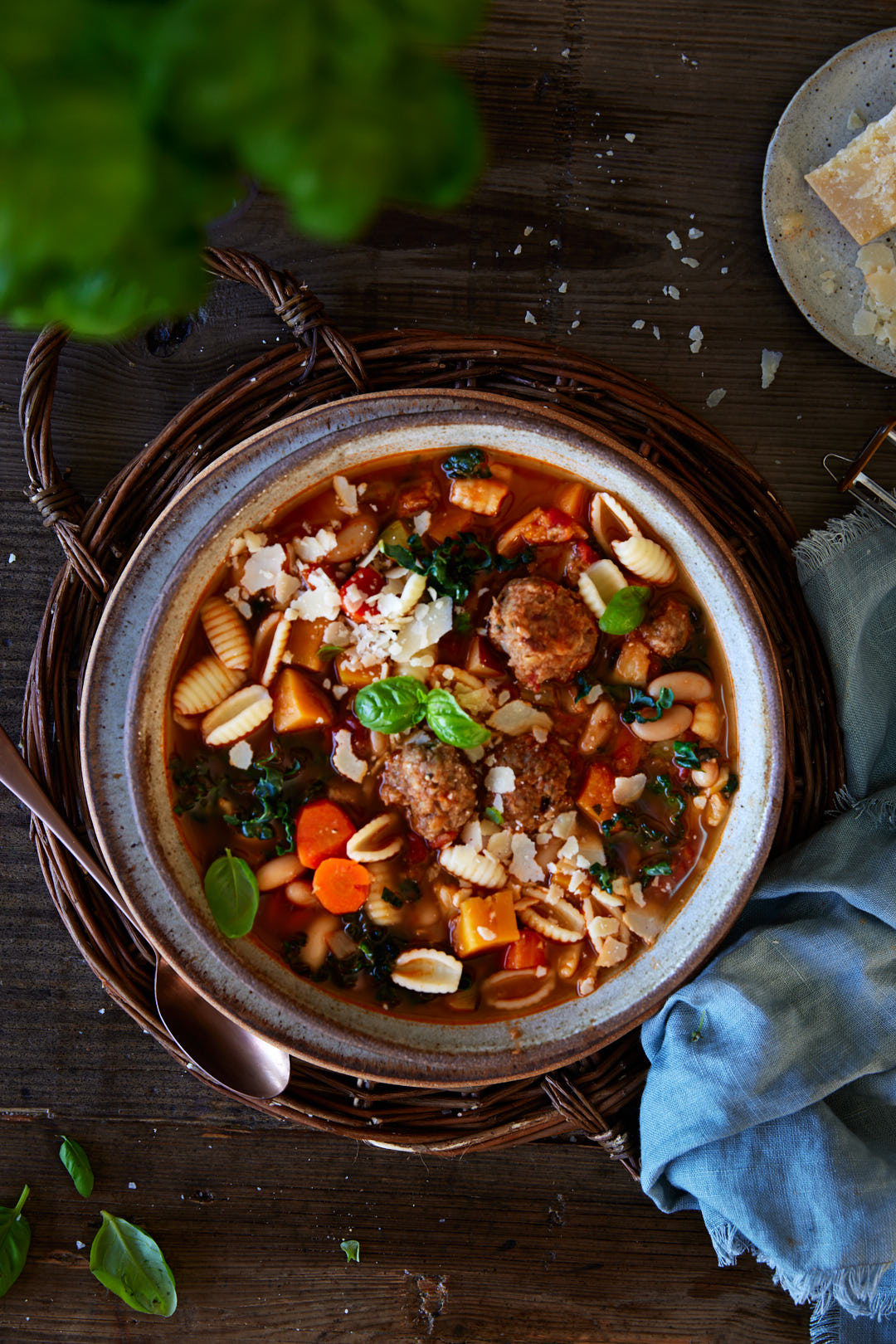
This is my twist on the classic minestrone soup. I decided to add meatballs to the soup to turn it into a heartier one pot meals because it’s February and we all need some comfort. I decided to keep the soup vegetarian by substituting Beyond Ground Beef for regular ground beef. You can also use it in chili and my vegetarian meaty lasagna, This was my first time using it to make meatballs. The results were excellent. They were tender and moist.
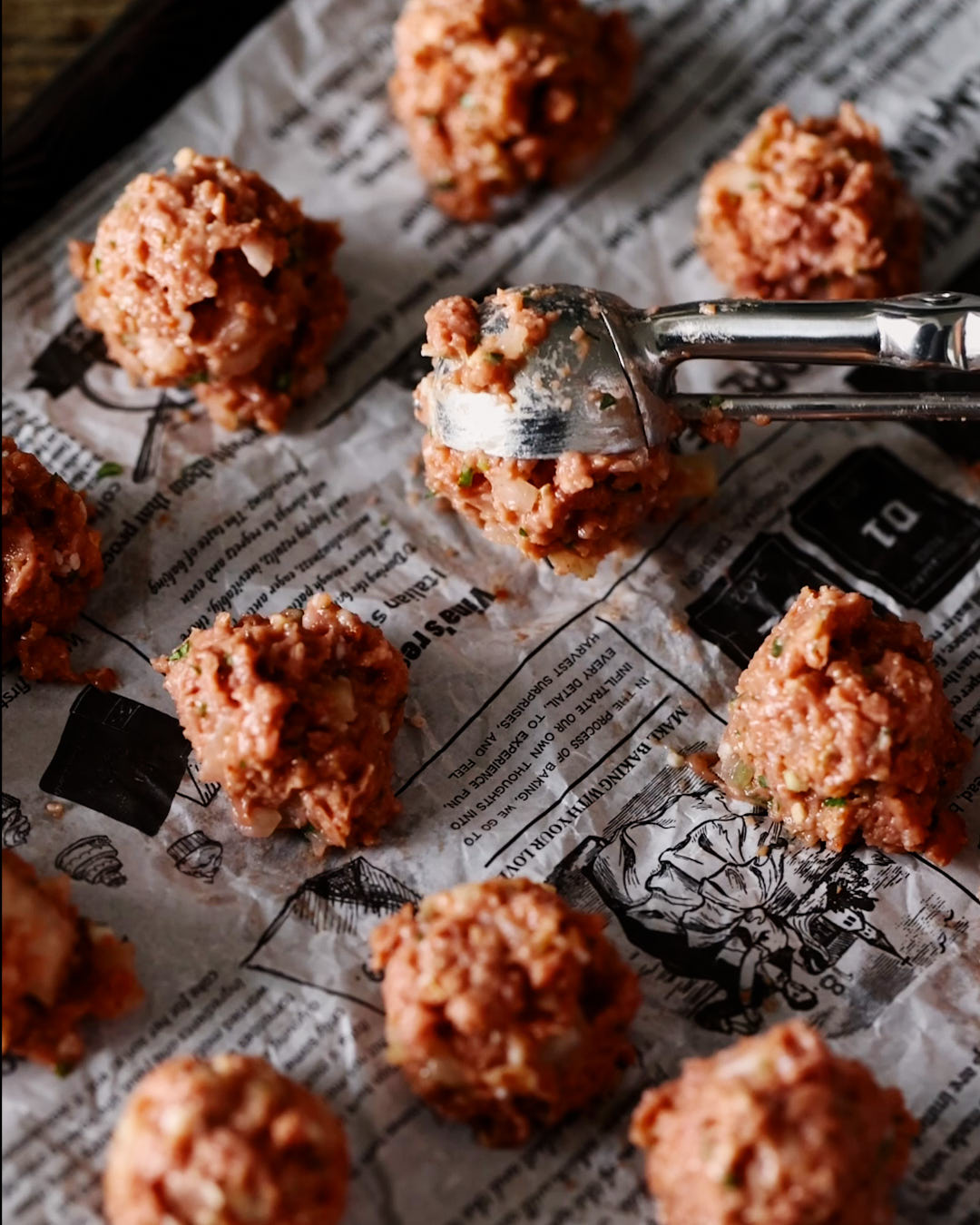
The usual meatball binders, of egg and breadcrumbs were employed, along with lots of finely diced onion to add moisture. For spice, I added ground fennel seed and lots of Aleppo pepper. I used a mini meatball scoop to form them and baked them in the oven while the soup was cooking.
Tips for success:
Yes, there are are lots of ingredients. Don’t let this scare you. This is not a weekday soup recipe. Set aside some time on the weekend, put on some music or a podcast or binge some old episodes of Top Chef, and get chopping. I like to chop everything before I start cooking. Then I know I won’t forget any ingredients.You will be rewarded with a big hug in a bowl.
The ingredients are very customizable. The basics include a mirepoix (carrots, onions and celery), but the additional vegetables could be whatever is seasonal or you just happen to have hanging around in your fridge. I used butternut squash, zucchini and red potato.
When sautéing your mirepoix, keep the heat on medium. You don’t want to brown the veggies at this point, you’re just looking to soften them. If they start to stick to the bottom of the pot or get too dark, add about 1/4 cup of water to slow things down.
I added kale, but feel free to use spinach or any other hearty green. For the pasta, you want a small shape, like macaroni, orecchiette, small shells or ditalini.
Don’t rush the cooking/browning of the tomato paste. You really want the tomato paste to get dark brown. There is a ton of flavour and umami in tomato paste and we want to take advantage of that by browning to develop those deep rich flavours.
If you’re not saving your parmesan rinds, after you’ve grated all the cheese, start now. Throw them in a bag in the freezer and add a rind or two of Parmesan cheese to the simmering soup. Parmesan is packed with umami. The savoury flavour of the cheese will enrich your soup.
Just before serving stir in about a Tablespoon of sherry or red wine vinegar. This tiny bit of acid wakes the sop up.
Watch how the soup comes together in this video.
Meatball Minestrone Soup
saltandserenity
This is my twist on a classic minestrone soup. The addition of meatballs makes it a hearty, comforting one pot meal. I used a plant-based ground beef (Beyond Ground Beef) to make my meatballs and was thrilled with the results. The meatballs were tender and moist.
1/2 teaspoonDiamond Crystal Kosher salt or 1/4 teaspoon Morton's Kosher salt
1/4 cupItalian parsley leavesfinely chopped
1/2 teaspoon ground fennel seed
1/2 teaspoon Aleppo pepperor ¼ teaspoon red pepper flakes
Soup
2large carrotspeeled and chopped into ¼ inch pieces
2 ribscelerypeeled and chopped into ¼ inch pieces
1largeyellow onionpeeled and diced into ¼ inch pieces
2Tablespoonsolive oil
1/4 cup tomato paste
1teaspoonAleppo pepperor ½ teaspoon red pepper flakes
1/2 teaspoon dried oregano
2 sprigsfresh thymeor 1/2 teaspoon dried thyme
2bay leaves
1teaspoonDiamond Crystal Kosher salt or ½ teaspoon Morton’s Kosher salt
1/4 teaspoonblack pepper
128 ouncecan of crushed or diced Italian plum tomatoeswith juices
5cupsvegetable or chicken stock
1mediumred potatowashed and diced into ½ inch pieces
1/2 small butternut squashpeeled and diced into ½ inch pieces
1smallzucchinipeeled and diced into ½ inch pieces
1 rindParmesan cheese
115 ounce can of white beansdrained and rinsed
1poundblack kale (also known as Lacinato, Dinosaur or Tuscan kale)center ribs removed, and leaves sliced into thin julienne strips
1 cupdried small pasta, (shells or orecchiette)
1Tablespoonred wine or sherry vinegar
For Serving
1/2 cup grated Parmesan cheese
Instructions
Preheat oven to 375°F. Line a rimmed baking sheet with parchment paper and set aside.Place all meatball ingredients in a large mixing bowl. Using your clean hands, gently mix until well combined. Form small meatballs, using either a Tablespoon measure or a 1¼ inch mini scooper and arrange on baking sheet. Roast meatballs for 18-20 minutes until meatballs are well browned. Remove from oven and set aside.
While meatballs are roasting, heat olive oil in a large stockpot or Dutch oven over medium heat. Add carrots, celery and onion and sauté over medium heat for 6-8 minutes. If veggies start to burn or brown too quickly, add ¼ cup water to pan and continue cooking until veggies have softened and become translucent.
Add tomato paste and stir well, until all the vegetables are coated in the tomato paste. Cook for an additional 4-5 minutes until everything is well browned. There is flavour in the brown, you are developing deep flavours here. Add Aleppo, oregano, thyme, bay leaves, salt, and pepper and stir well.
Add canned tomatoes and stock. Stir well, scraping up any bits stuck to the bottom of the pot. Add potatoes, squash, zucchini, and Parmesan rind. Increase heat to high and bring mixture to a boil. Once boiling, turn down to simmer, partially cover the pot and simmer soup for 15-20 minutes, until potatoes and squash are tender.
Remove lid, add beans and pasta and simmer, uncovered for an additional 15 minutes. Add kale and meatballs and simmer for another 5 minutes, until pasta is cooked. Remove bay leaves and Parmesan rind and discard.
Just before serving, stir in 1 Tablespoon vinegar.
Ladle soup into bowls and top with grated parmesan cheese.
Even though I’m a food blogger, when it comes to dinner, I fall into a rut just like everyone else, making the same things every week. For years the only salmon recipe I made was salmon with a chipotle honey lime glaze. It was delicious but it was time to change things up.
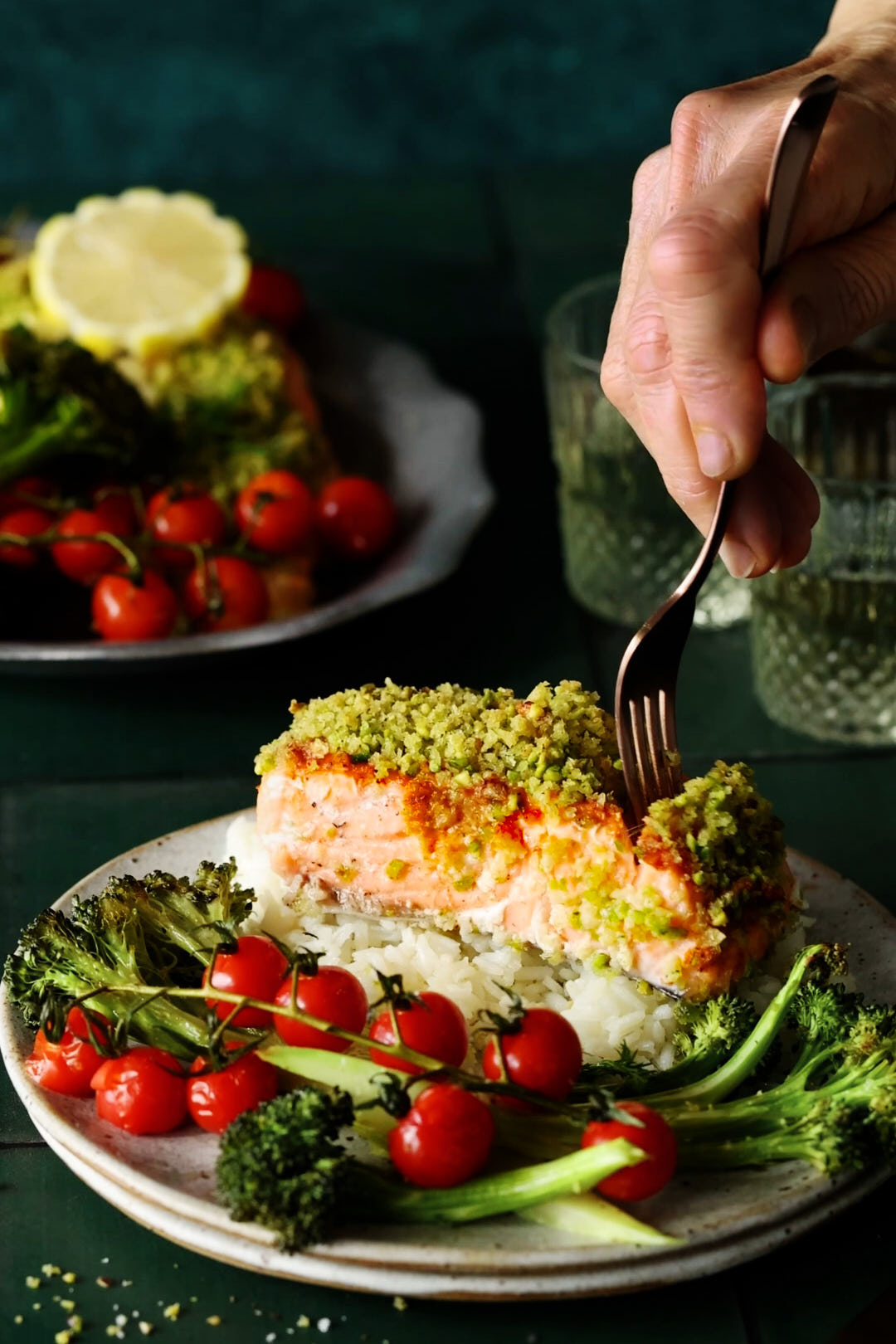
A pangrattato is the process of making toasted breadcrumbs, using stale bread, olive oil and some seasonings, usually salt and garlic. It’s known as the poor man’s parmesan and is quite popular in in southern Italy where they use it as a topping for pasta. My version adds some pistachios, lemon zest and dill and I use it to top salmon before baking.
Watch it all come together.
I used a mix of mayonnaise and harissa paste as the “glue” to make sure the breadcrumb topping really sticks to the fish. I love the signature harissa paste from NY Shuk. It has the perfect hit of heat.
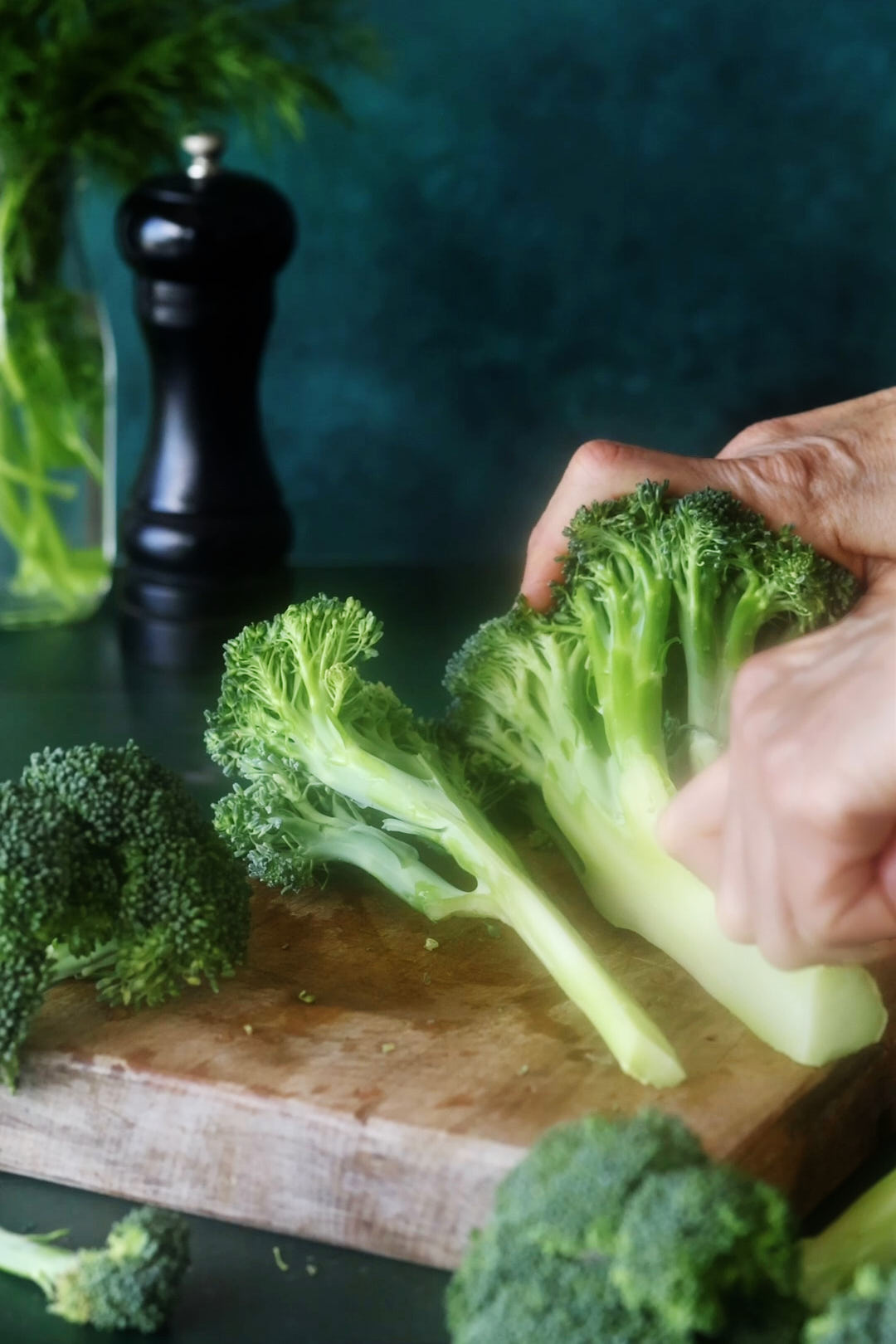
Since the salmon is baked in the oven, I decided to make this salmon recipe a sheet pan dinner. I added broccoli and cherry tomatoes. Peel the woody broccoli stems and then cut the broccoli from crown to stem, to make planks. The flat surface of the planks, gives you more surface area that comes into contact with the pan, allowing the broccoli to crisp up better.
The balance of different textures of this dish really enhances the eating experience. The rich buttery flavour and tender texture of the salmon contrasts so perfectly with the crunchy pistachio breadcrumb topping. The harissa paste adds a welcome hit of heat and acid. Add this to your dinner rotation. You’ll thank me.
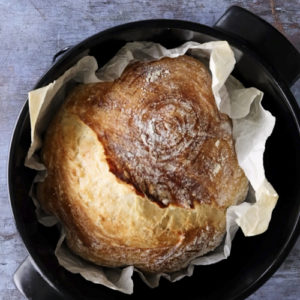
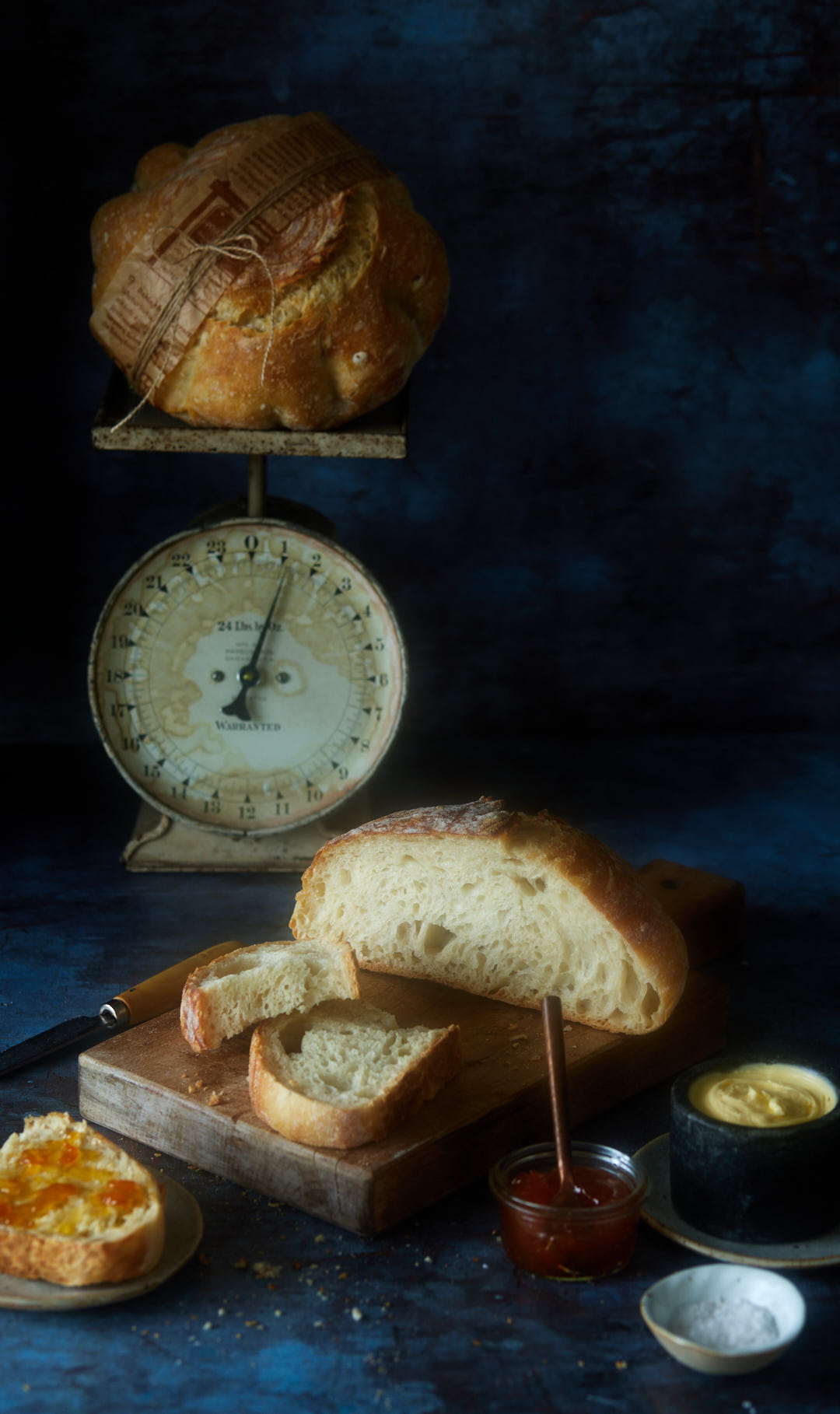
It’s possible to make bread dough without kneading. There are 2 major factors at play here that help create this wonderful bread. The first is mixing up a very wet dough and letting it sit, at room temperature for 18 hours. Food scientist, Harold McGee, explained it like this, to Bittman,
“It makes sense. The long, slow rise does over hours what intensive kneading does in minutes: it brings the gluten molecules into side-by-side alignment to maximize their opportunity to bind to each other and produce a strong, elastic network. The wetness of the dough is an important piece of this because the gluten molecules are more mobile in a high proportion of water, and so can move into alignment easier and faster than if the dough were stiff.”
The second major factor involved in making this bread is where Jim Lahey’s real genius comes into play. He discovered that by baking the bread in a covered preheated cast iron or enamel pot (like a Le Creuset), you mimic the steam ovens that professional bakers use to develop that crisp crackling crust so desirable on artisan breads.
During my 18 month journey through the Bread Baker’s Apprentice Challenge, I tried all sorts of methods to produce steam in my home oven. I put a pan of hot water at the bottom of the oven, I sprayed the sides of my oven wall with a plant mister during baking, I added ice cubes to the oven during the baking process and I even tried adding lava rocks to the pan of hot water, to mimic a sauna. I never did achieve that holy grail of crackling crust.
Here are a few tips for success:
This is a very wet dough. It’s important to mix it well and make sure there are no dry bits of flour anywhere in the bowl before you cover it up for the 18 hour rest period.
When you are ready to form the loaf, liberally flour the work surface and wet your hands to prevent the dough from sticking. A flexible dough scraper will be a helpful tool to use.
In the original recipe, Jim says to just form the dough into a ball and place it on a cotton towel, cover it and let rise. I found that placing it in a special bread rising basket (a banneton) helped this very wet dough hold it’s shape much better. A banneton is woven bread mold, usually made of made of cane and is used to form and shape artisan loaves during the proofing/raising stage. The basket imprints its shape and ribbed design on the finished loaf. You can also just line a colander with a clean cotton towel, although you won’t get the cool design on your bread.
You need to heavily flour the banneton or towel you line your bowl with so it does not stick. I used rice flour. Rice flour is like teflon for sourdough, ensuring that it doesn’t stick to the banneton during proofing.
Use a lame or sharp knife to cut a shallow slit into the top of the bread before baking. This will allow the steam to escape from the bread in a controlled fashion when baking
A few words about the pot to cook the dough in. Just about any covered 6-8 quart covered pot will work here. Cast iron or enameled cast iron (like Le Creuset) work very well for this job. The pot and lid need to be preheated in a 450°F oven for at least 30 minutes before transferring bread into the pot. I have revised the original recipe to allow you to use parchment paper to help you get the dough into the hot pot more safely. (watch the video at the beginning of this post to see)
The bread is done when an instant read thermometer, inserted into the center, registers 200°F-205°F. For optimum texture, be patient and allow bread cool on a wire rack for at least 2 hours before slicing.
6-to 8-quart heavy covered pot, cast iron, enamel, Pyrex or ceramic
Ingredients
430 gramsbread flour
1graminstant yeasta generous 1/4 teaspoon
10gramsDiamond Crystal Kosher saltor 5 grams Morton's Kosher salt
345gramswaterroom temperature
Additional bread flour for dusting surface of counter
Rice flour for dusting banneton or towel for proofing dough
Instructions
In a large bowl combine flour, yeast, and salt. Add water, and stir until blended; dough will be shaggy and sticky. Just make sure there are no bits of dry flour. Cover bowl with plastic wrap or tea towel. Let dough rest at least 12hours, preferably about 18, at warm room temperature, about 70 degrees.
Dough is ready when its surface is dotted with bubbles. Lightly flour a work surface. Wet your hands and scrape the dough out of the bowl onto the floured counter. Sprinkle it with a little more flour and fold it over on itself once or twice, sort of like folding a letter into thirds. Cover loosely with plastic wrap or towel and let rest about 15 minutes.
Using just enough flour to keep dough from sticking to work surface or to your fingers, gently and quickly shape dough into a ball, pinching to keep the seam closed. If you have a banneton, (bread proofing basket) dust it well with rice flour and shake out excess. If you do not have a banneton, line a small colander with a cotton towel (not terrycloth) and dust well with rice flour. Put dough seam side up into banneton or towel lined colander and dust with more flour. Cover with another cotton towel and let rise for about 2 hours. When it is ready, dough will be more than double in size and will not readily spring back when poked with a finger.
At least a half-hour before dough is ready, heat oven to 450°F. Put a 6-8-quart heavy covered pot (cast iron, enamel, Pyrex or ceramic) in oven as it heats. Take a sheet of parchment paper, about 12 inches square and crinkle it up. Use your hands to smooth it out. Get a baking sheet or small cutting board ready.
When dough is ready, put on oven mitts and carefully remove pot from oven. Uncover bread. Place sheet of parchment paper over the colander or baneton. Cover with cutting board or upside-down baking sheet and flip the entire thing over. Lift off banneton or colander. Use a lame or sharp knife to cut a shallow slit into the top of the bread. This will allow the steam to escape from the bread in a controlled fashion when baking. Remove pot lid. Lift edges of parchment and carefully transfer bread into pot.
Cover with lid and bake 30 minutes, then remove lid and bake another 15 minutes, until loaf is beautifully browned, and internal temperature of bread reaches 200°F. Cool on a rack for several hours before slicing.
While I don’t practice “Dry January”, I am a big proponent of “Gentle January”. I do not rush boldly into the new year, filled with resolutions and plans. I prefer to ease in 2024 slowly. I struggle with transitions and I like to take my time adjusting to a new year.
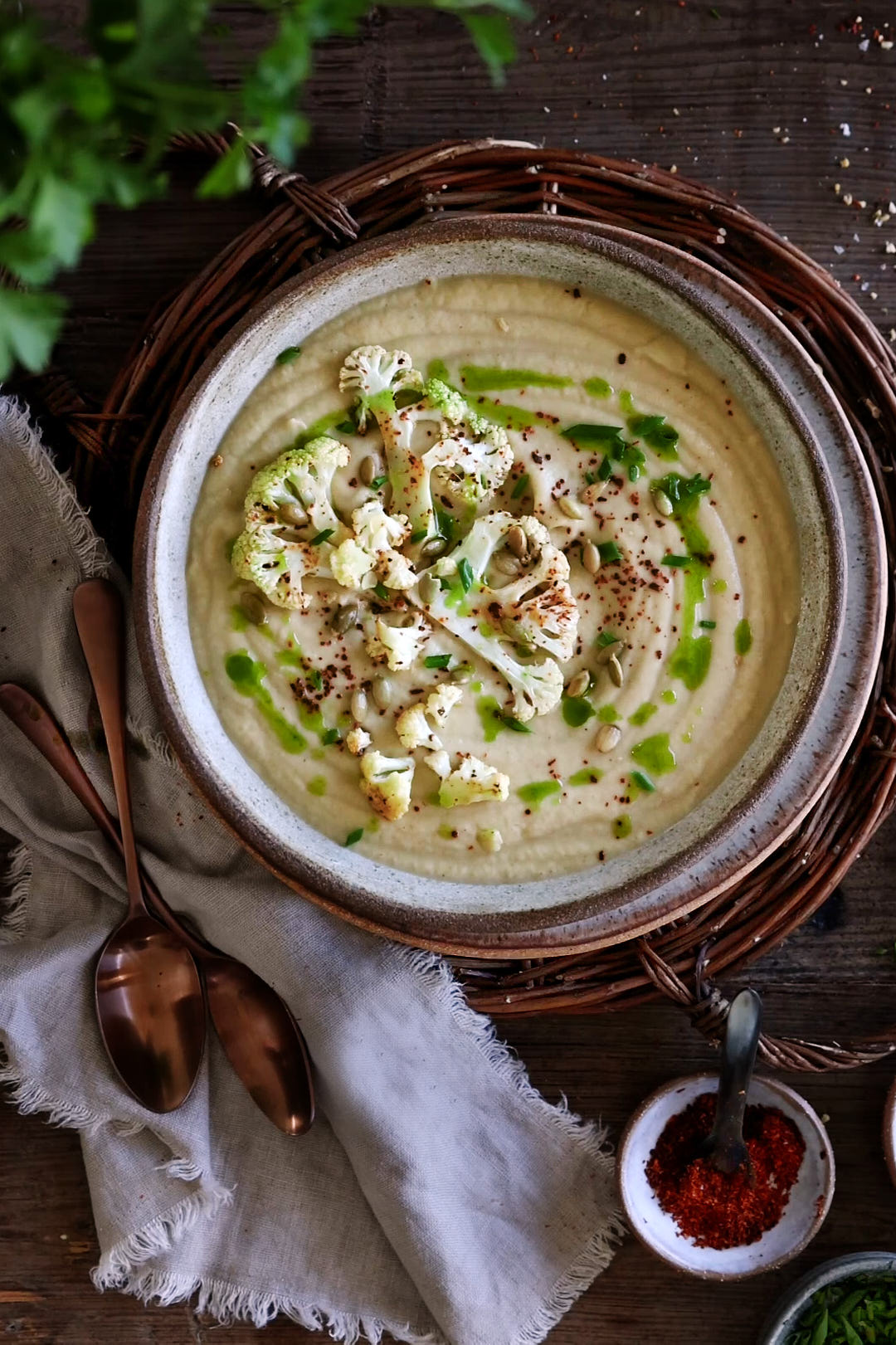
This soup is the perfect way to ease into 2024. It’s a lighter twist on a classic Leek and Potato Soup (vichyssoise). I have replaced the potato with cauliflower.
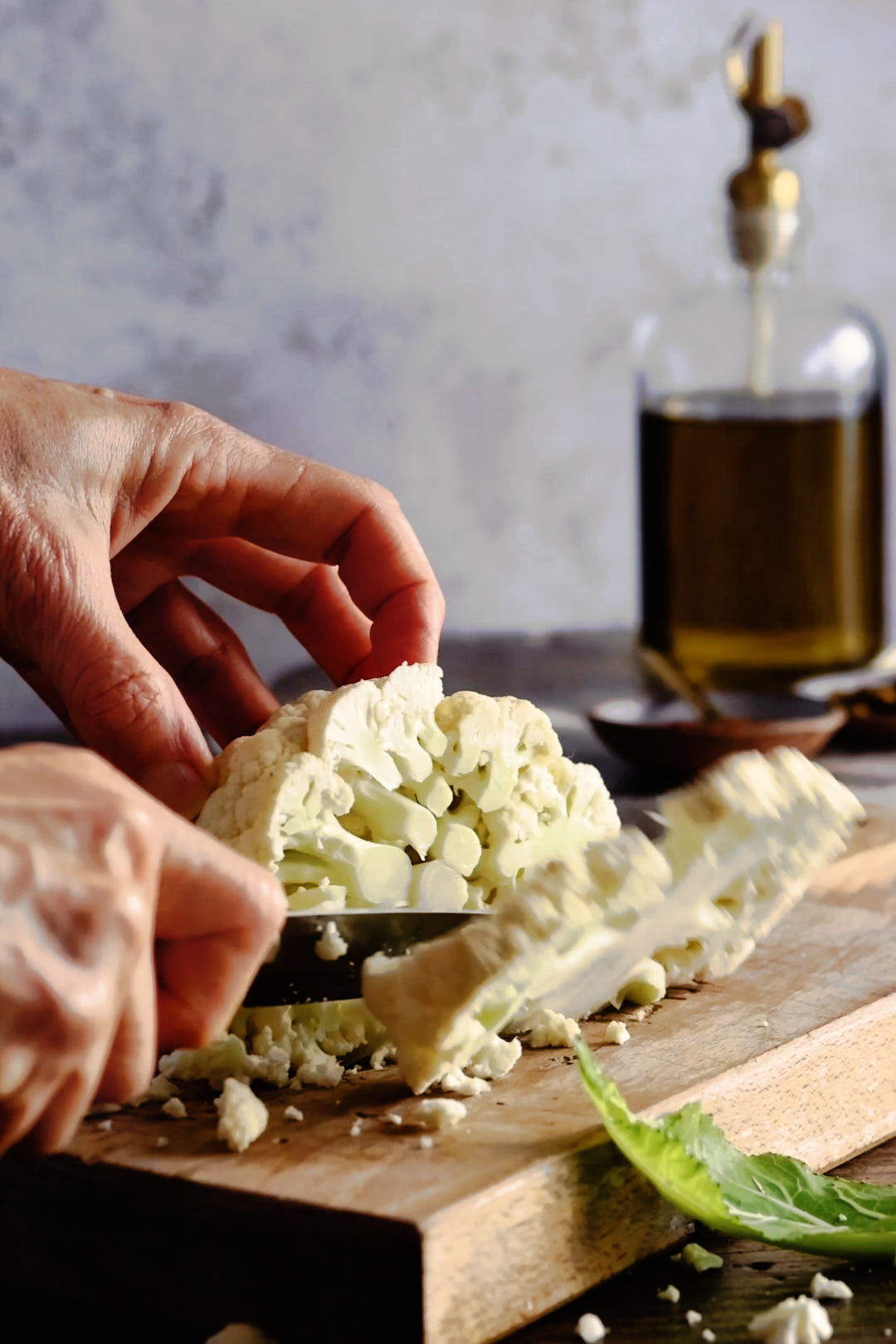
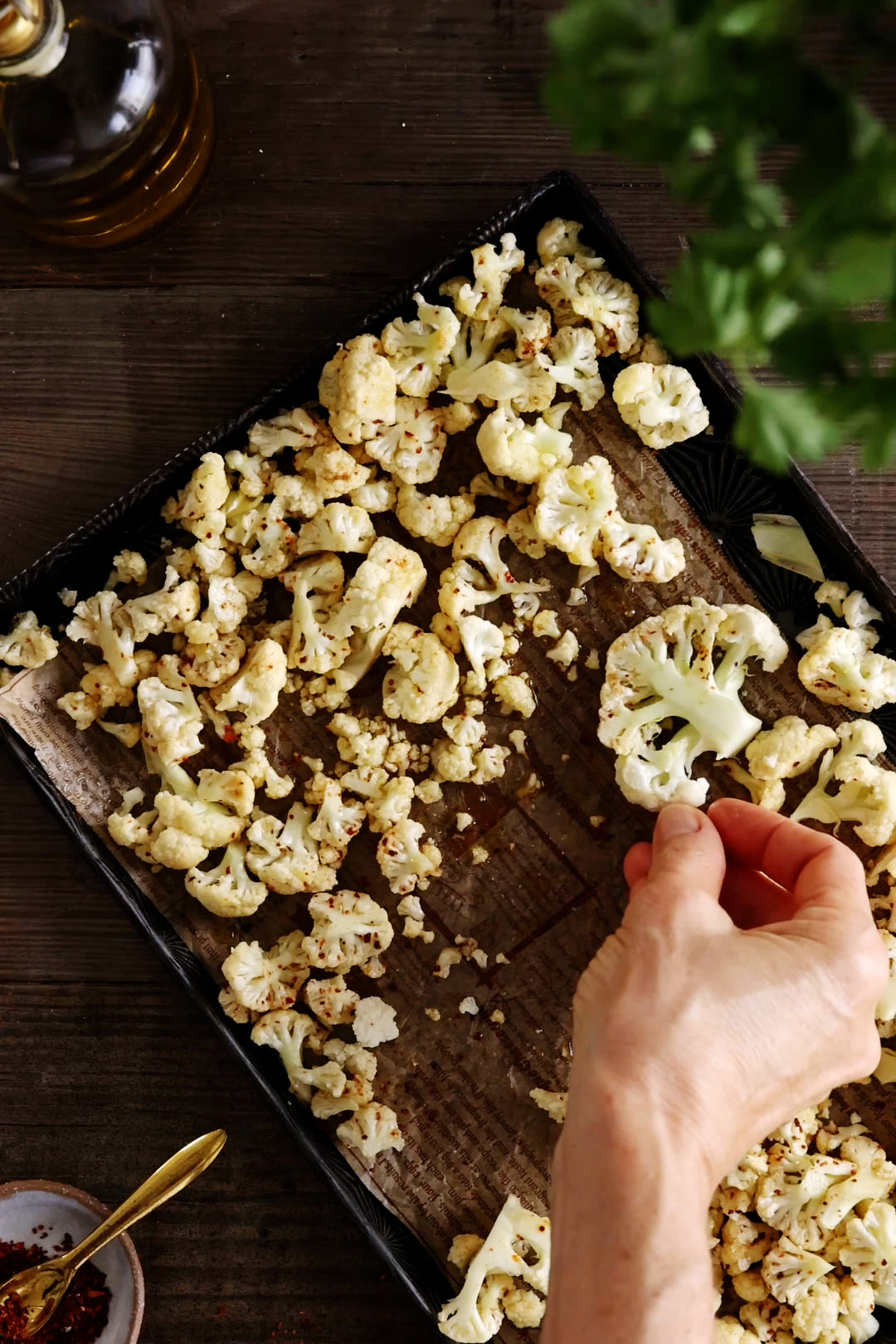
But you won’t miss the richness of the original soup because I have added white beans for body and protein. I like to roast the cauliflower to get that caramelized flavour. Cauliflower is a blank, bland canvas, so it can really take some bold seasoning. I went with Aleppo pepper (a fruitier, more gentle heat than red pepper flakes), and some earthy cumin. Since this is a pureed soup, save a few of the prettier roasted florets to garnish the top of the soup after roasting.
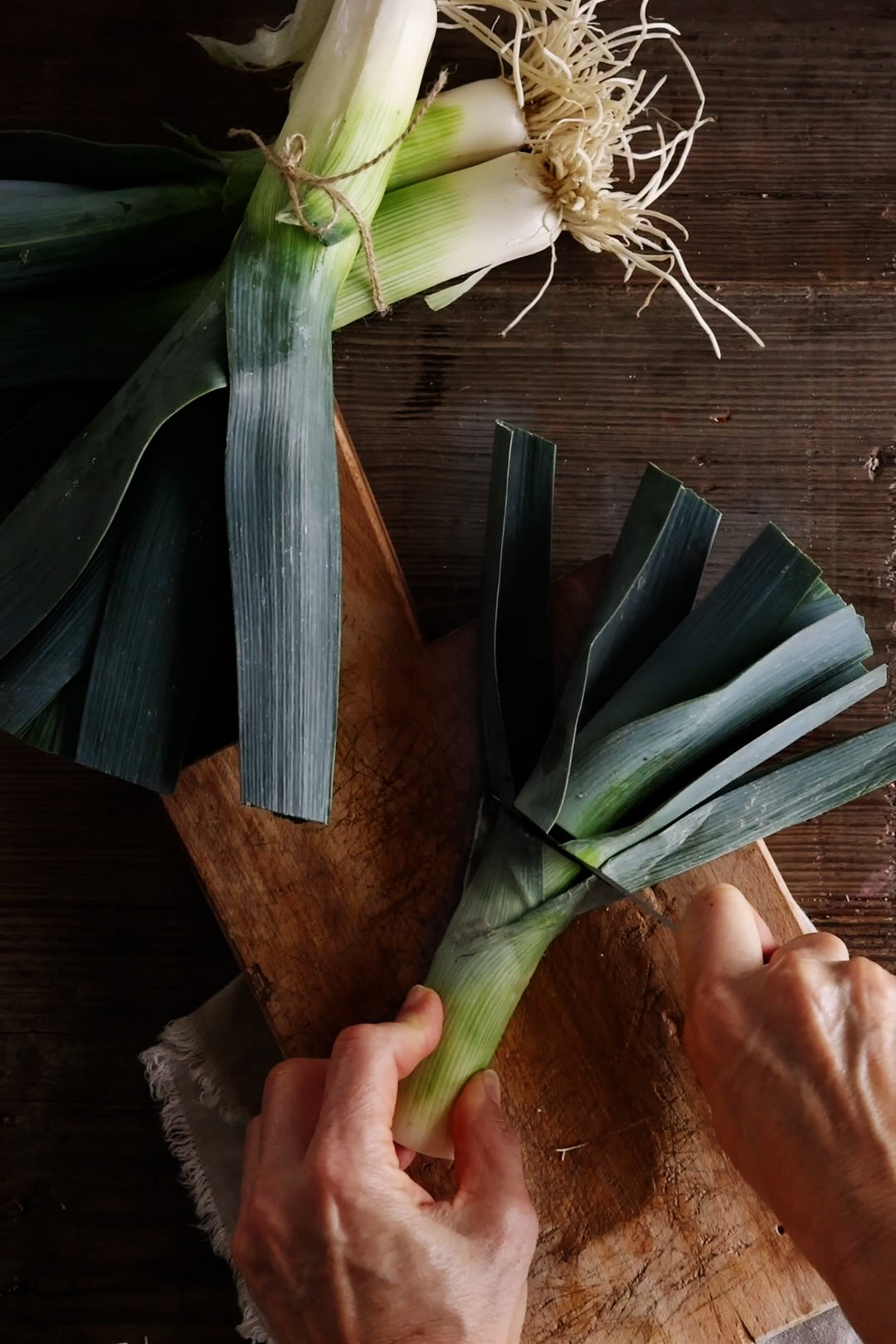
Leeks add a mild, delicate flavour to the soup, much less intense than regular onions. I love the flavour.
Cleaning leeks can be a bit tricky if you have never done it before. They are usually quite sandy, as they grow below ground. I find it’s easier to slice the leeks into thin slices and then submerge the slices in cold water to remove the sand. Check out how I do it in the video.
I garnished the soup with some roasted cauliflower, toasted pumpkin seeds and some chive oil. I have included the recipe for making your own. It’s such a pretty colour and really finishes off the soup. If you don’t feel like making it, a drizzle of some good quality extra virgin olive oil and a sprinkling of fresh chives would also be delicious. Not optional is the final mix in of a tablespoon of sherry or red wine vinegar. It really wakes up the soup.
There are some very skilled cookie decorators out there creating stunning piped holiday sugar cookies. I’m looking at you @arloscookies, @nm_meiyee, and @constellationinstallation. No matter how hard I practice, I will never reach those heights and I’m ok with that. I am in awe of their talent and love to look at their gorgeous creations.
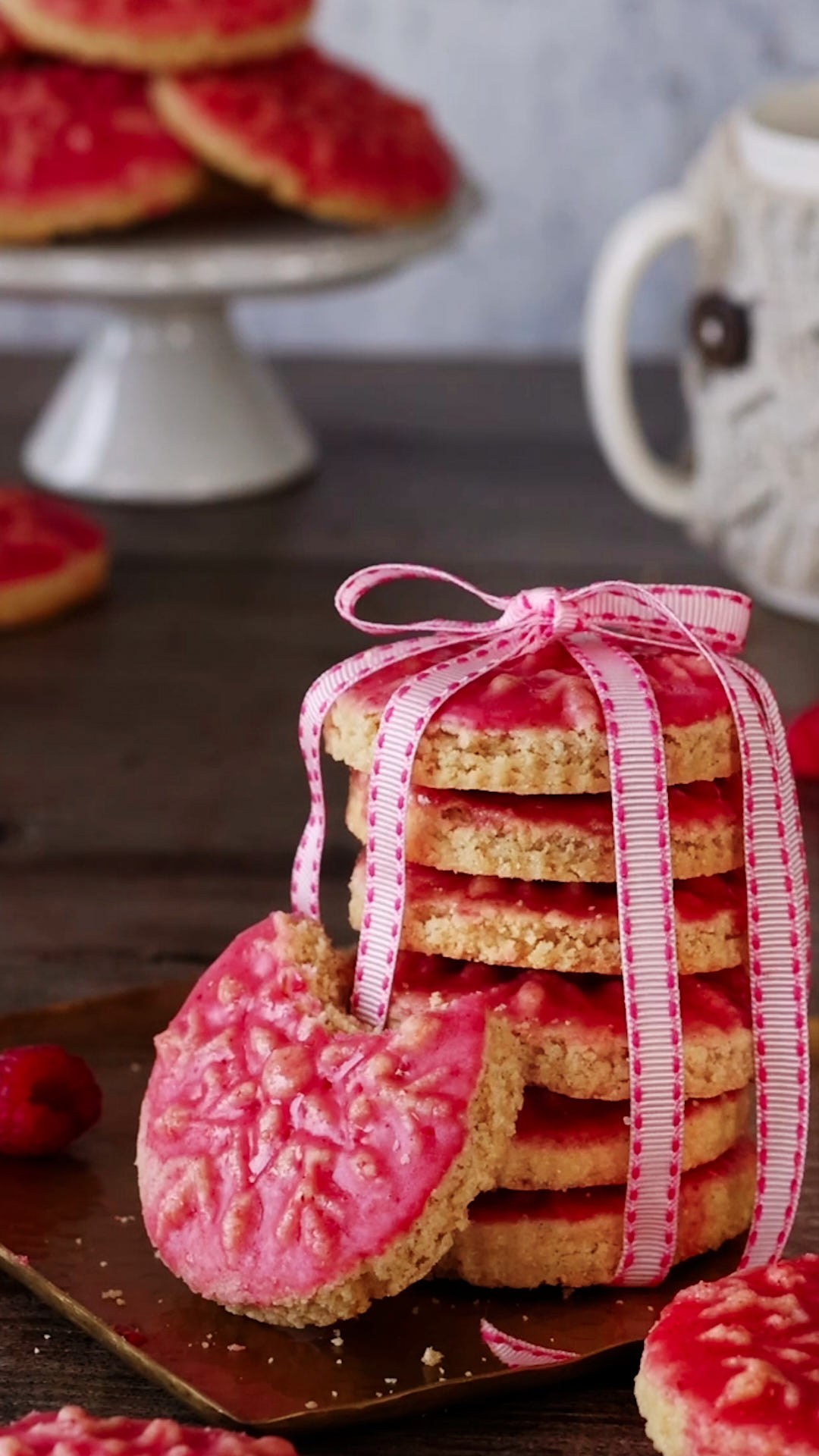
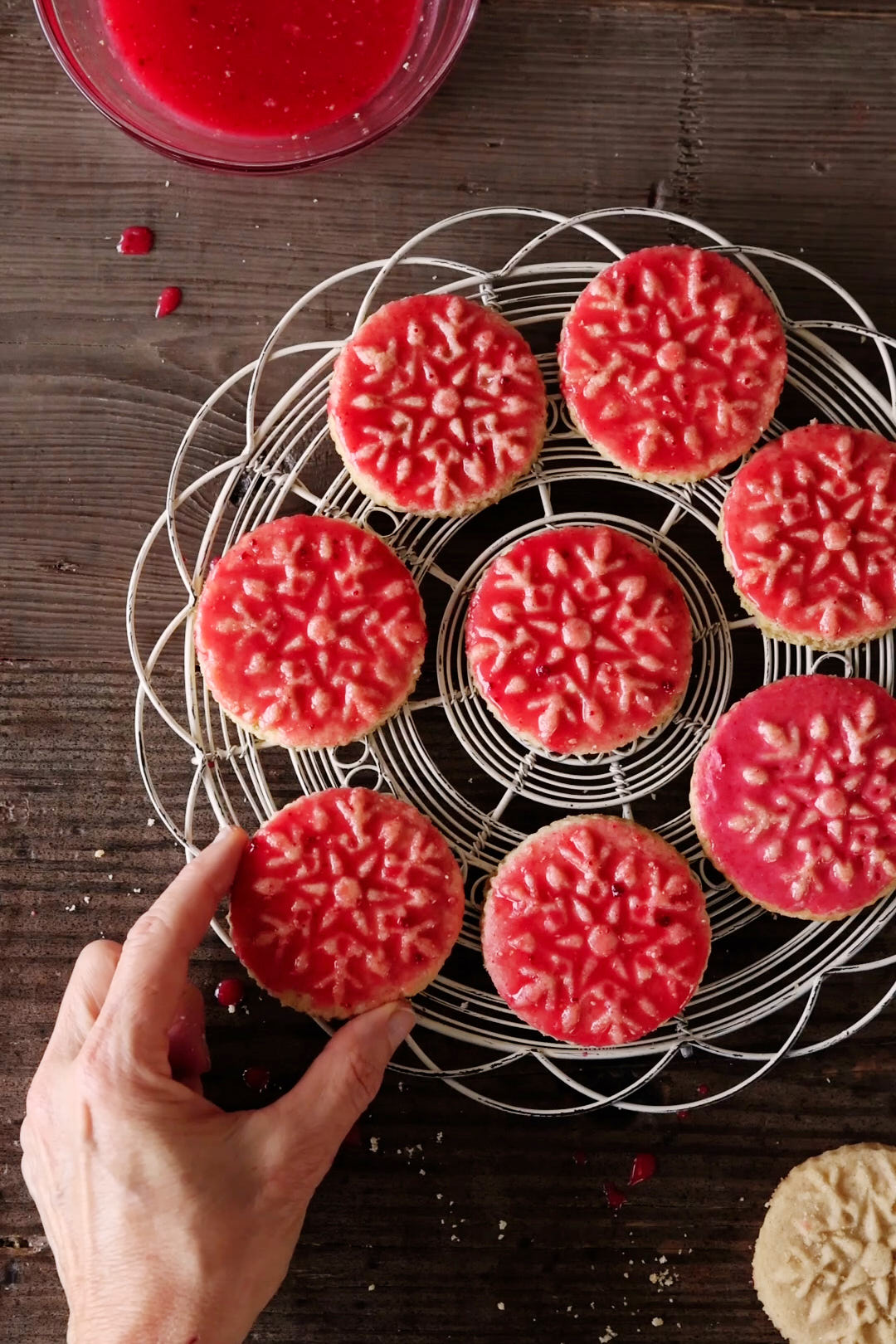
While I love the look of intricately piped sugar cookies, I find the taste of royal icing too cloying. These raspberry glazed snowflake sugar cookies are the perfect solution for beautiful and delicious sugar cookies. Watch how they come together.
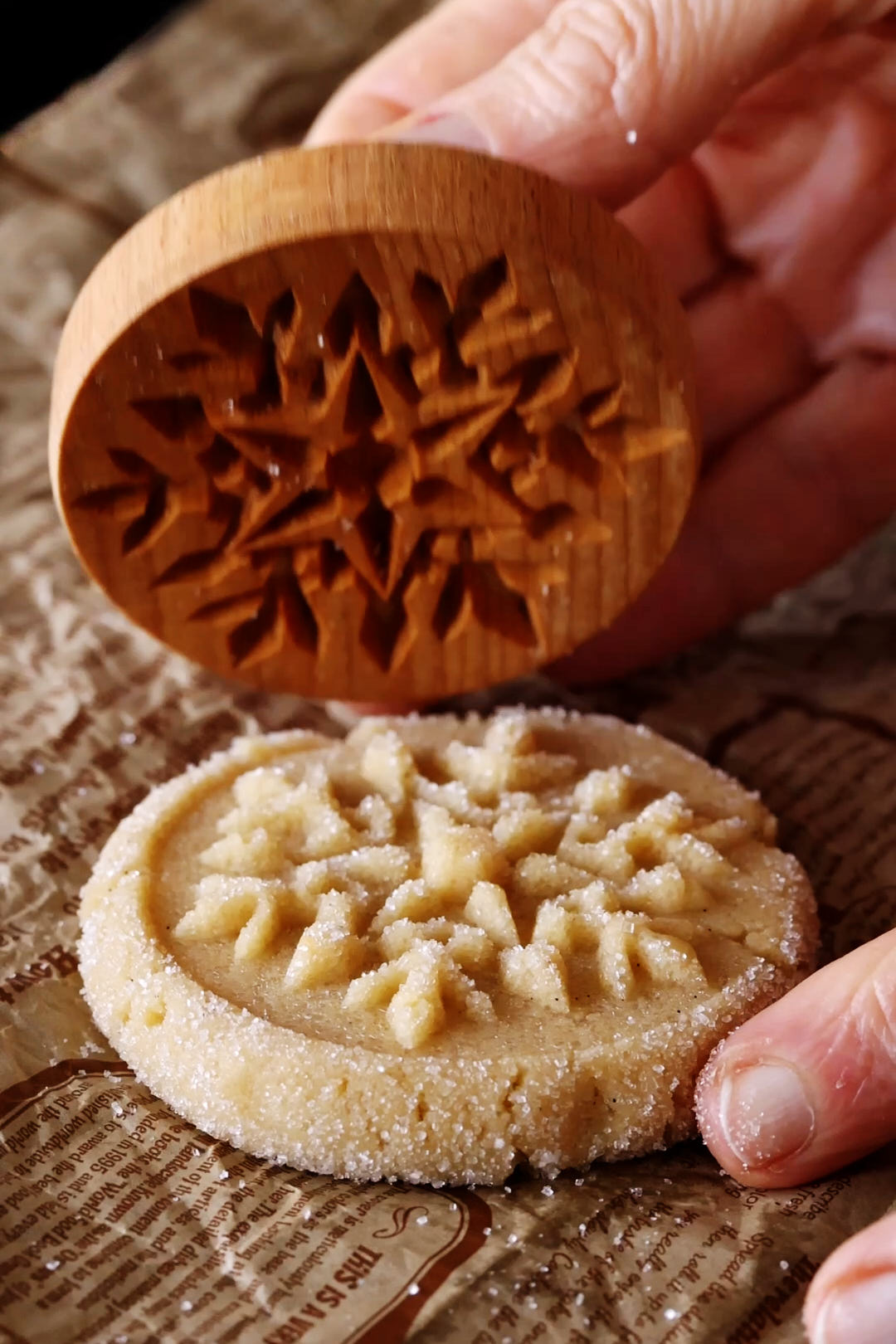
The dough is made with brown sugar, which creates a chewy cookie. All the decorations are done with a wooden cookie stamp from @fancyfoodtools. This is the one I bought.
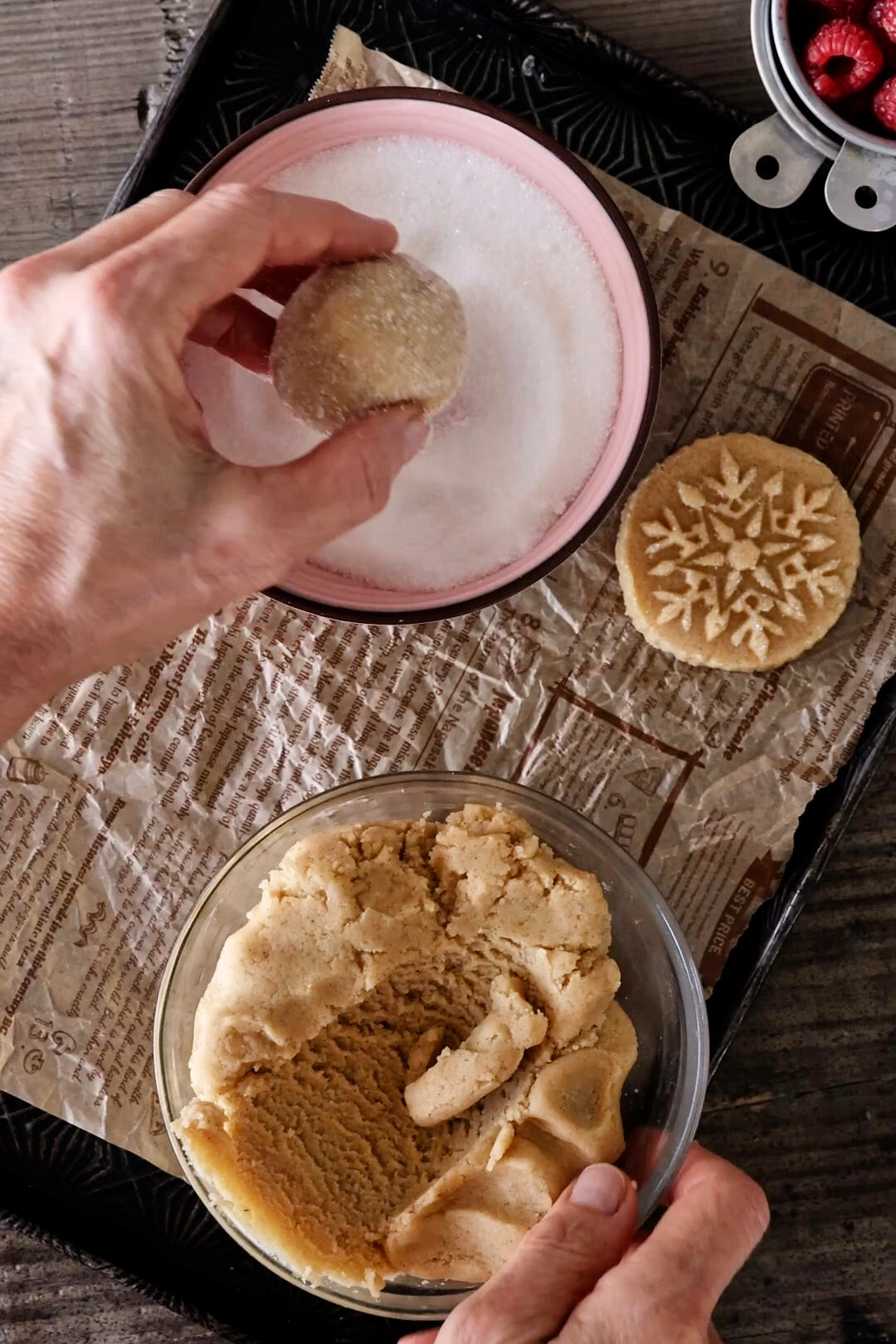
Not all wooden cookie stamps are created equal. Make sure you buy one that has deep enough grooves, so that when you bake the cookies, and they rise, the design will still be as sharp after baking. Roll the cookies in granulated sugar before stamping. The sugar ensures that the cookies will not stick to the stamp.
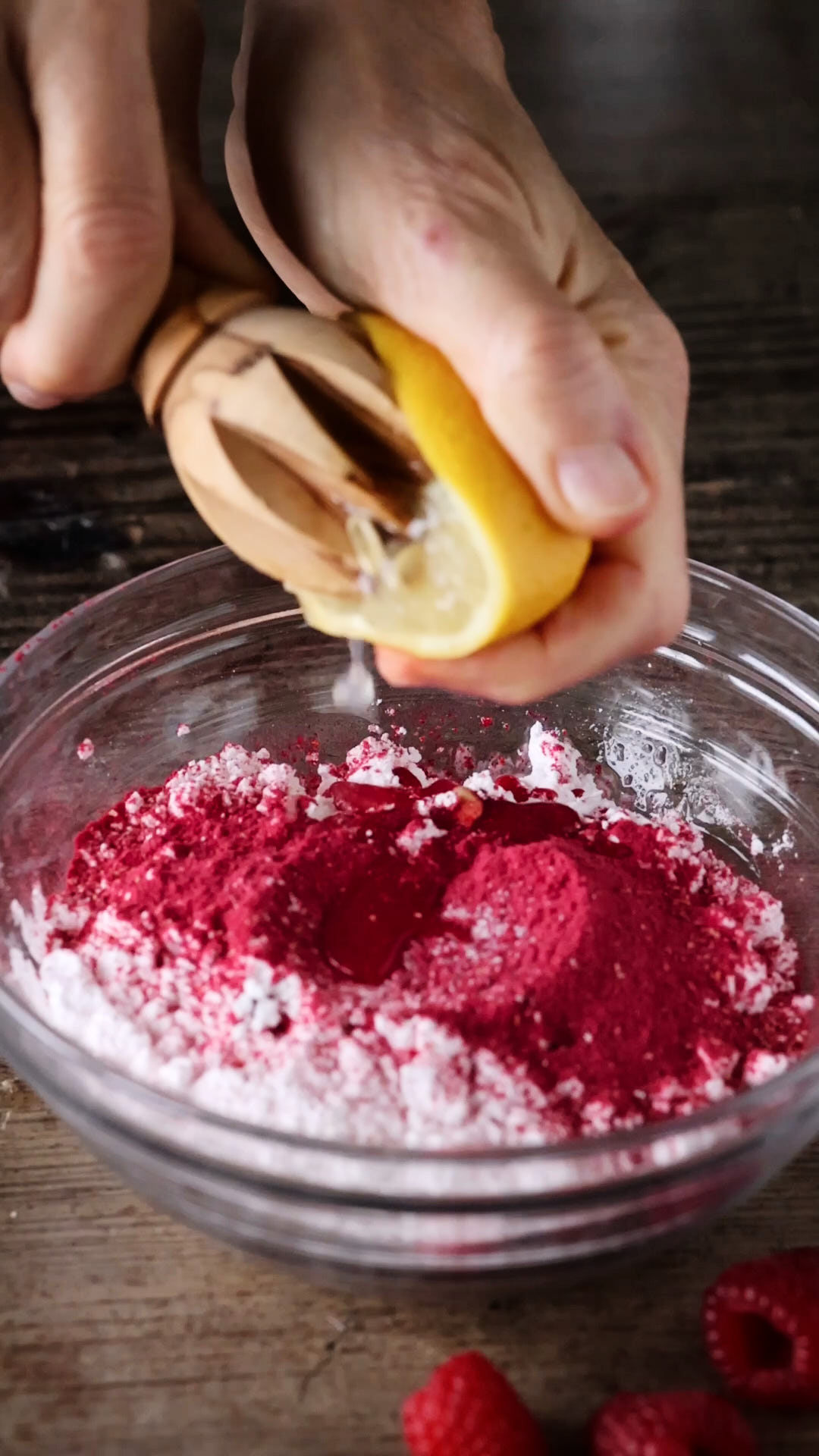
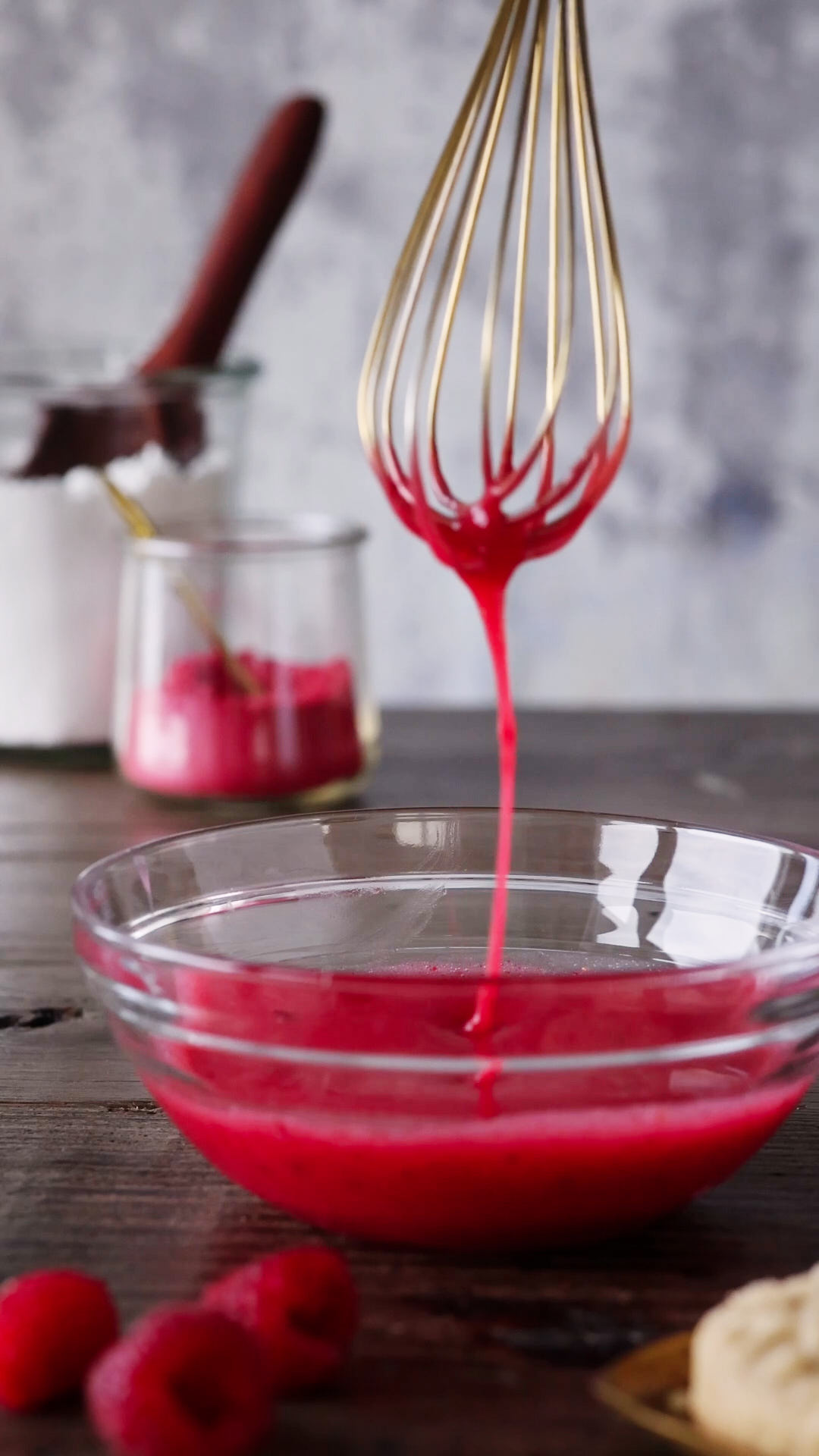
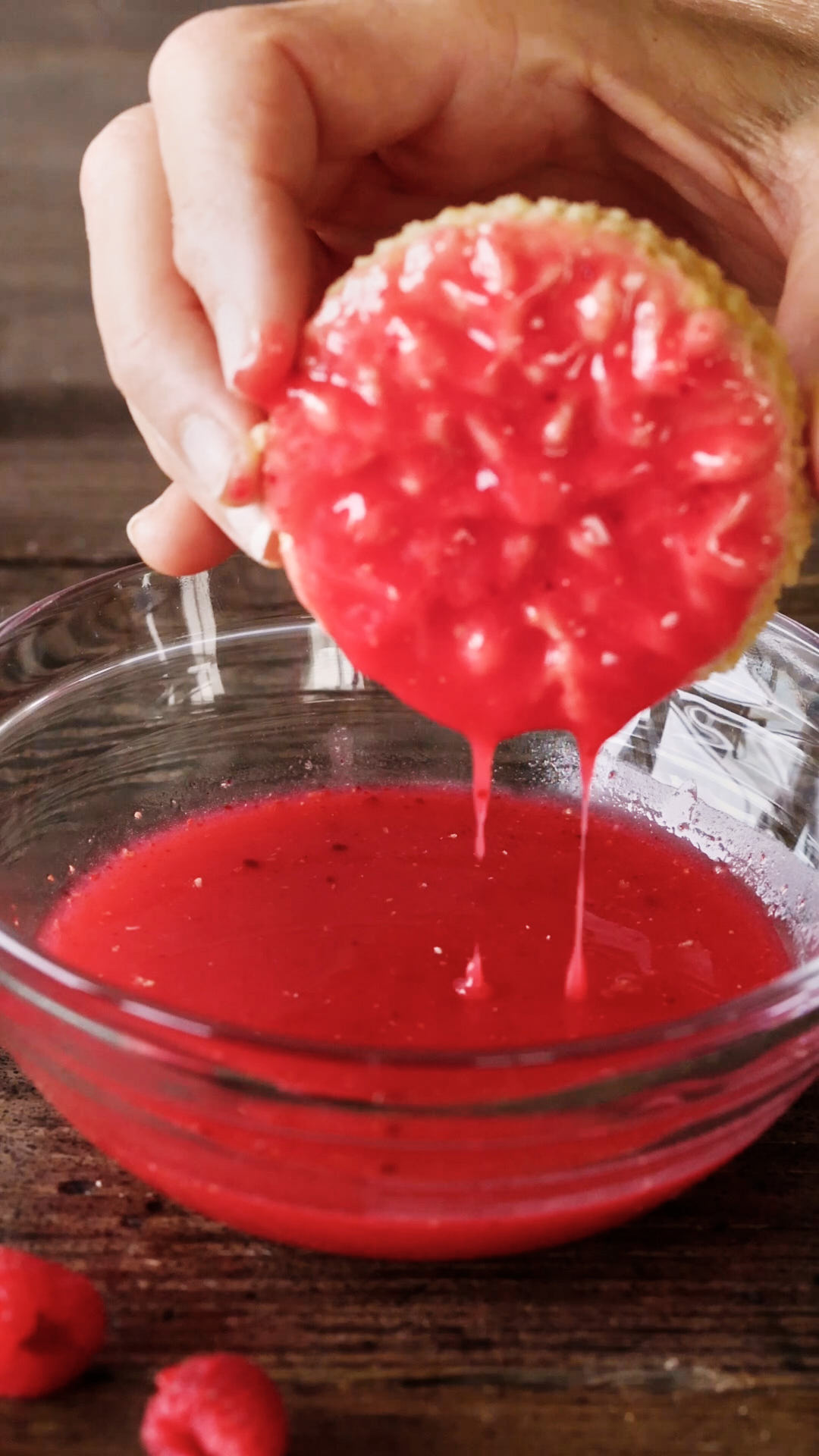
The glaze for these cookies is made with icing sugar, lemon juice and freeze dried raspberries. There is no artificial food colouring in them. The freeze dried raspberries must be ground up in a food processor or spice grinder. I like to put the ground berries through a fine mesh sieve, to strain out the seeds.
You want the glaze to be quite thin for dipping.
Once dipped, the glaze will take about an hour to set.
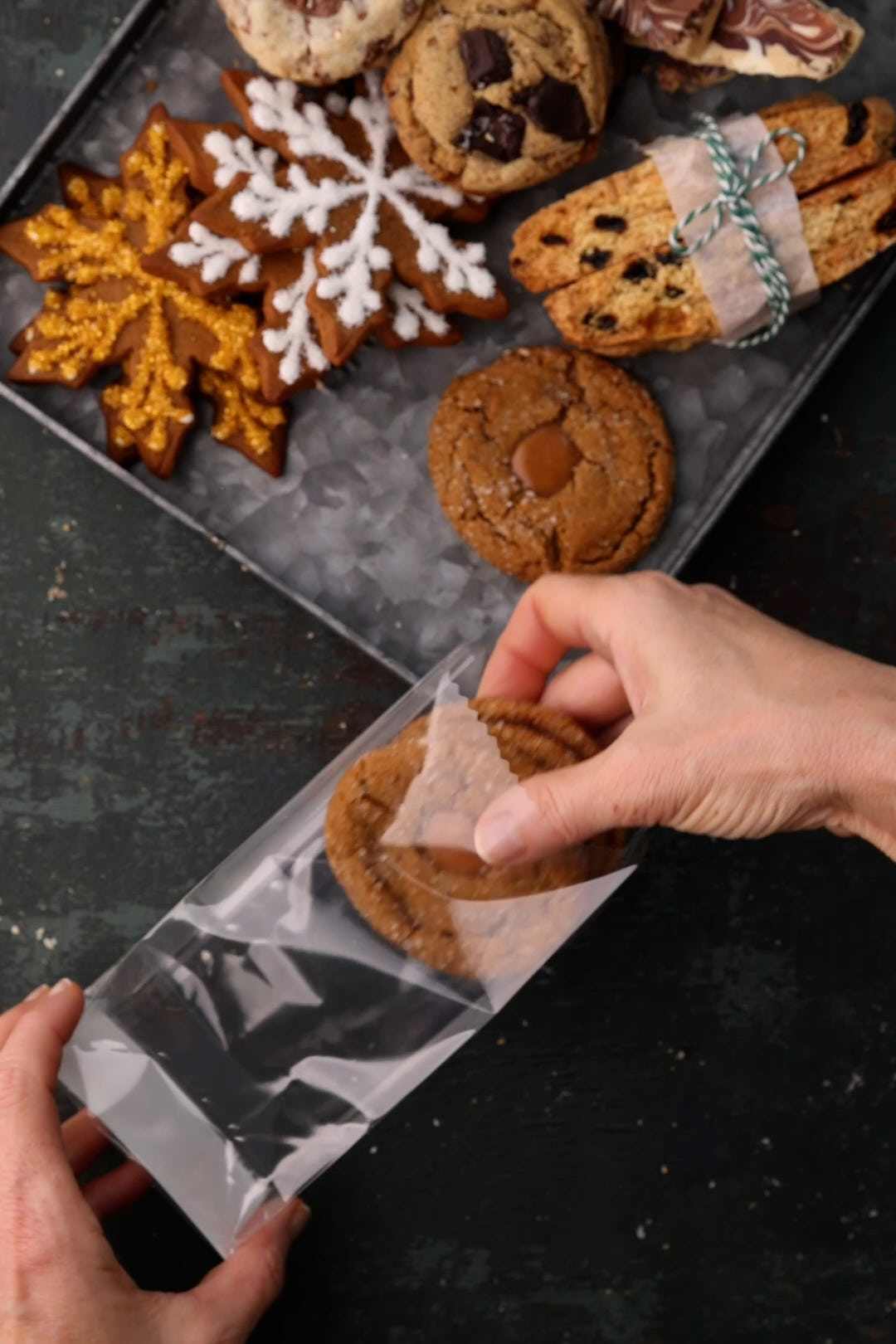
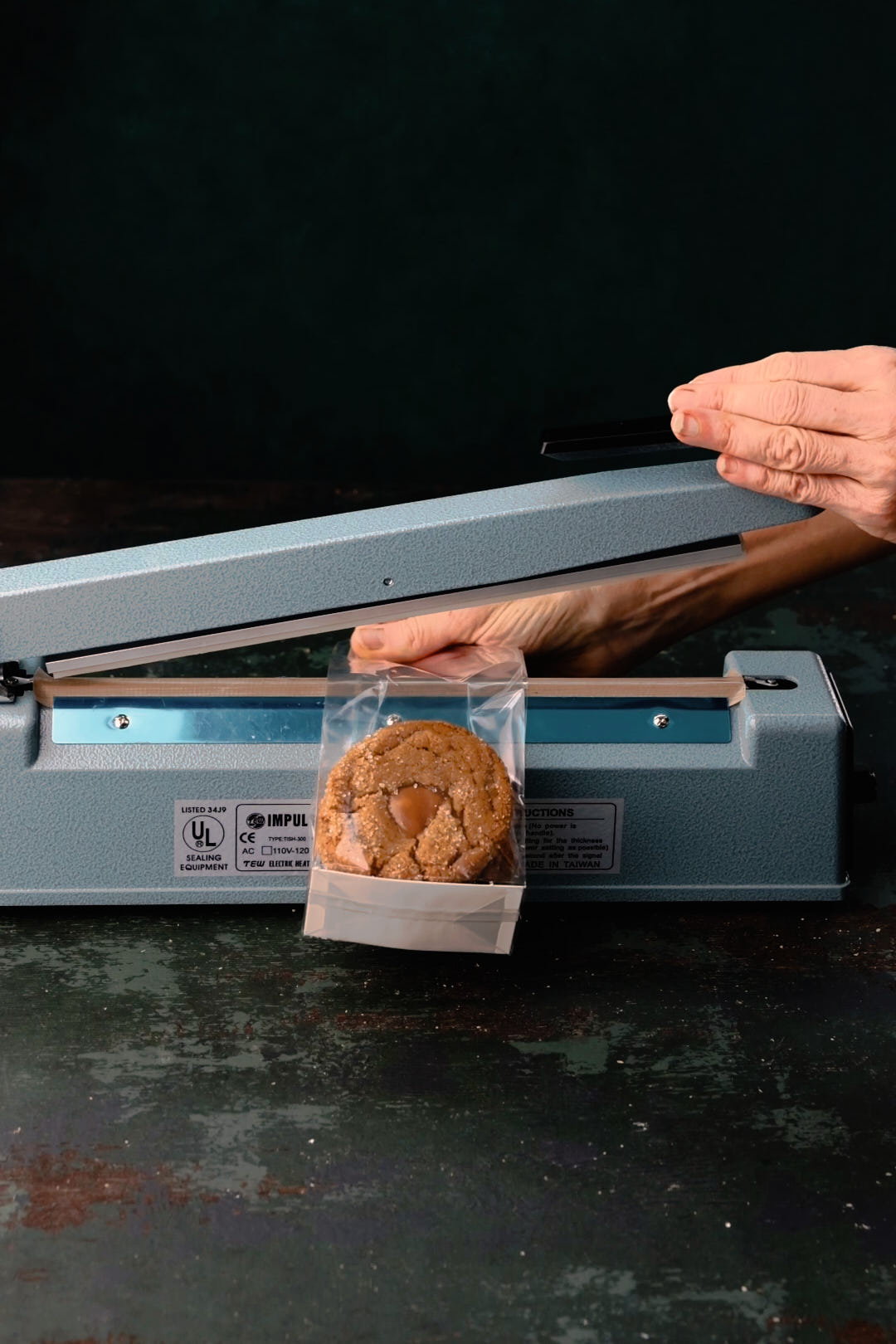
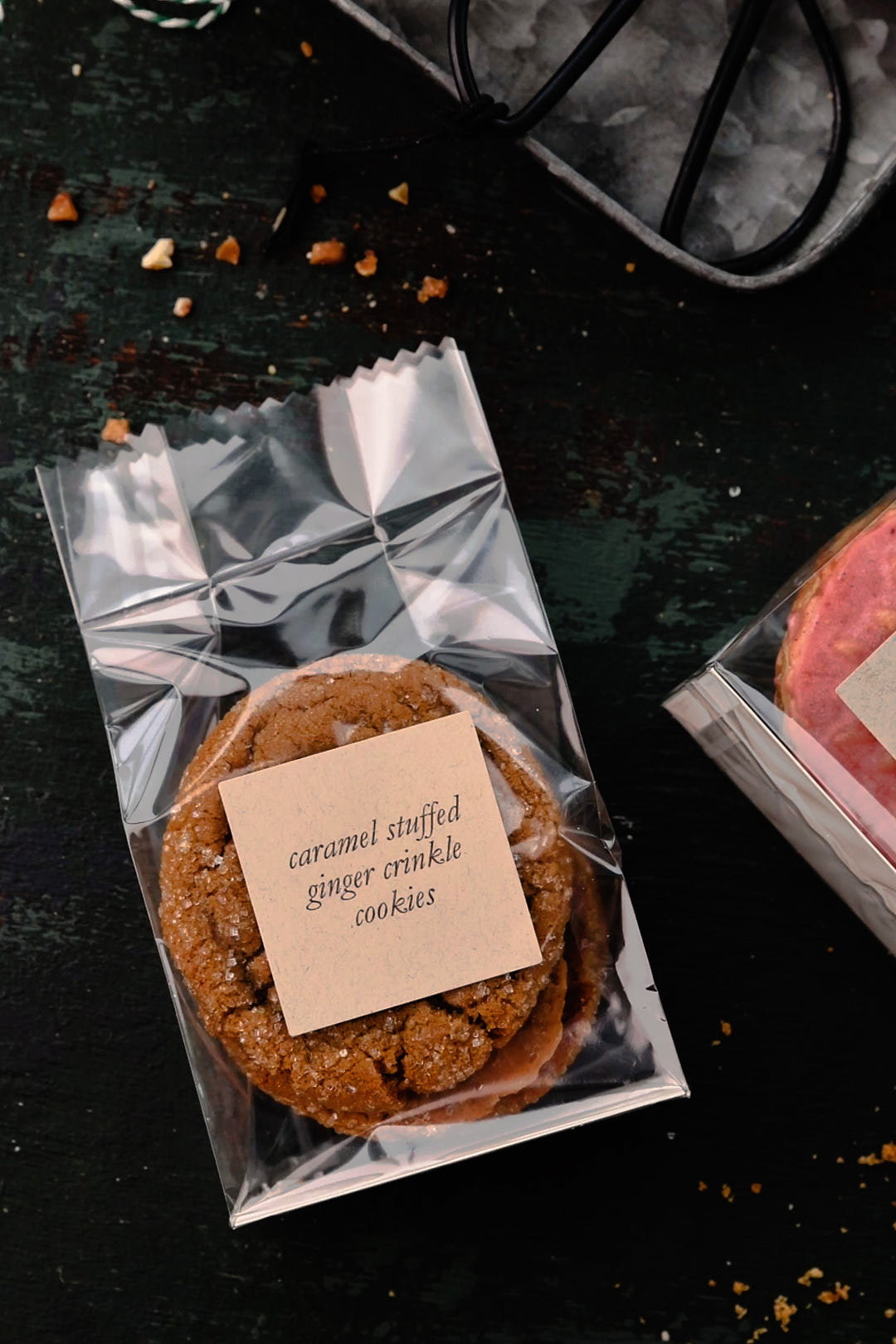
This year’s holiday roundup is probably my prettiest and most delicious ever. I made all my favourites for gifting. Cookies are my love language and I love to share them. I enjoy the entire process of gifting, from baking to sourcing packaging, and designing and choosing the fonts for the labels.
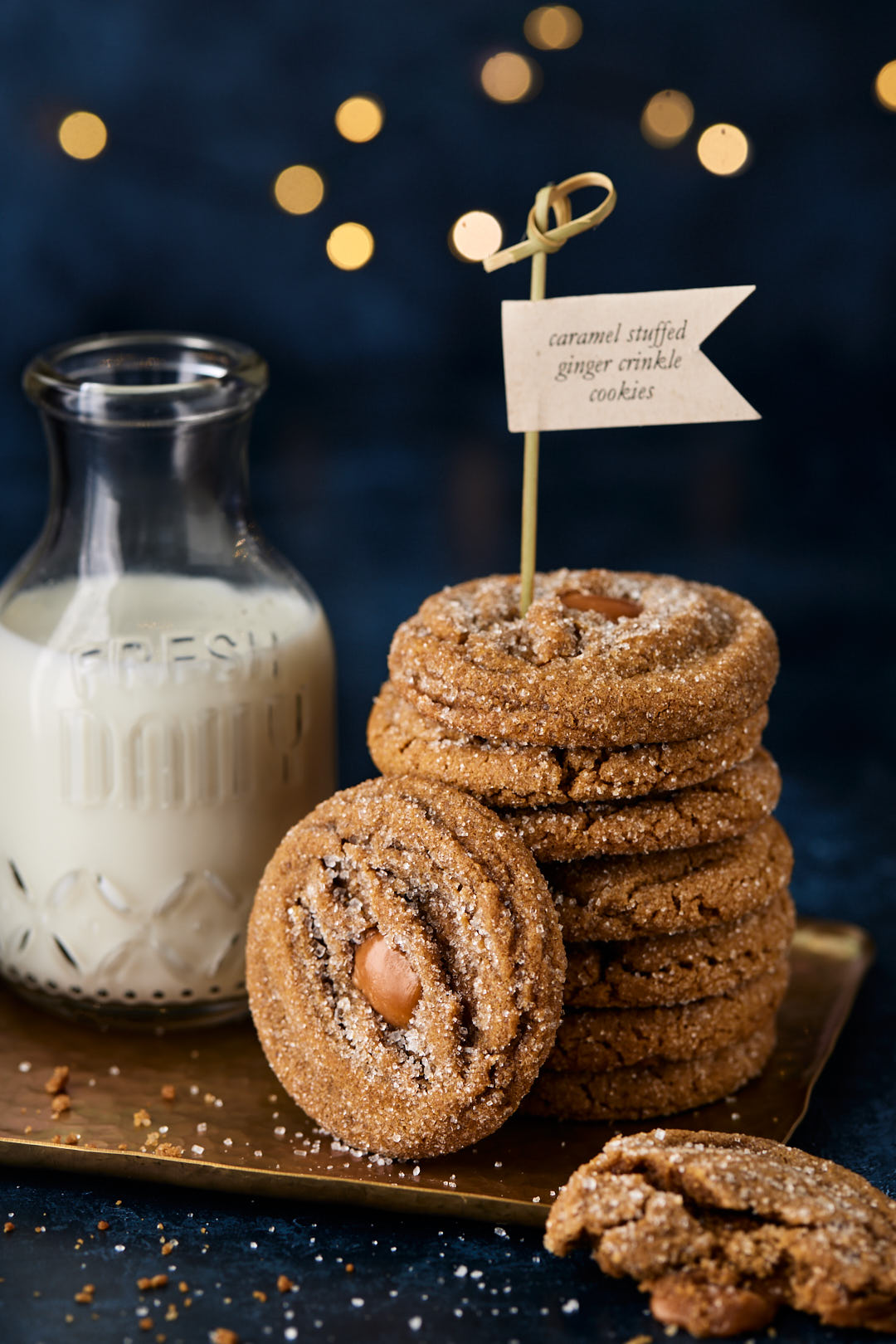
I first learned about Ginger Crinkle Cookies from my friend Lanie. She baked me a big batch and brought them to my cottage many years ago. I was instantly smitten. Crispy at the edges and chewy in the center, intensely flavoured with ginger and cinnamon. Typically, I have always though of ginger cookies as a winter Christmas type of cookie, but surprisingly, she found the recipe in the “Kosher Palette” cookbook. They make an excellent summer cookie too, especially when you sandwich some salted caramel ice cream between two of them!
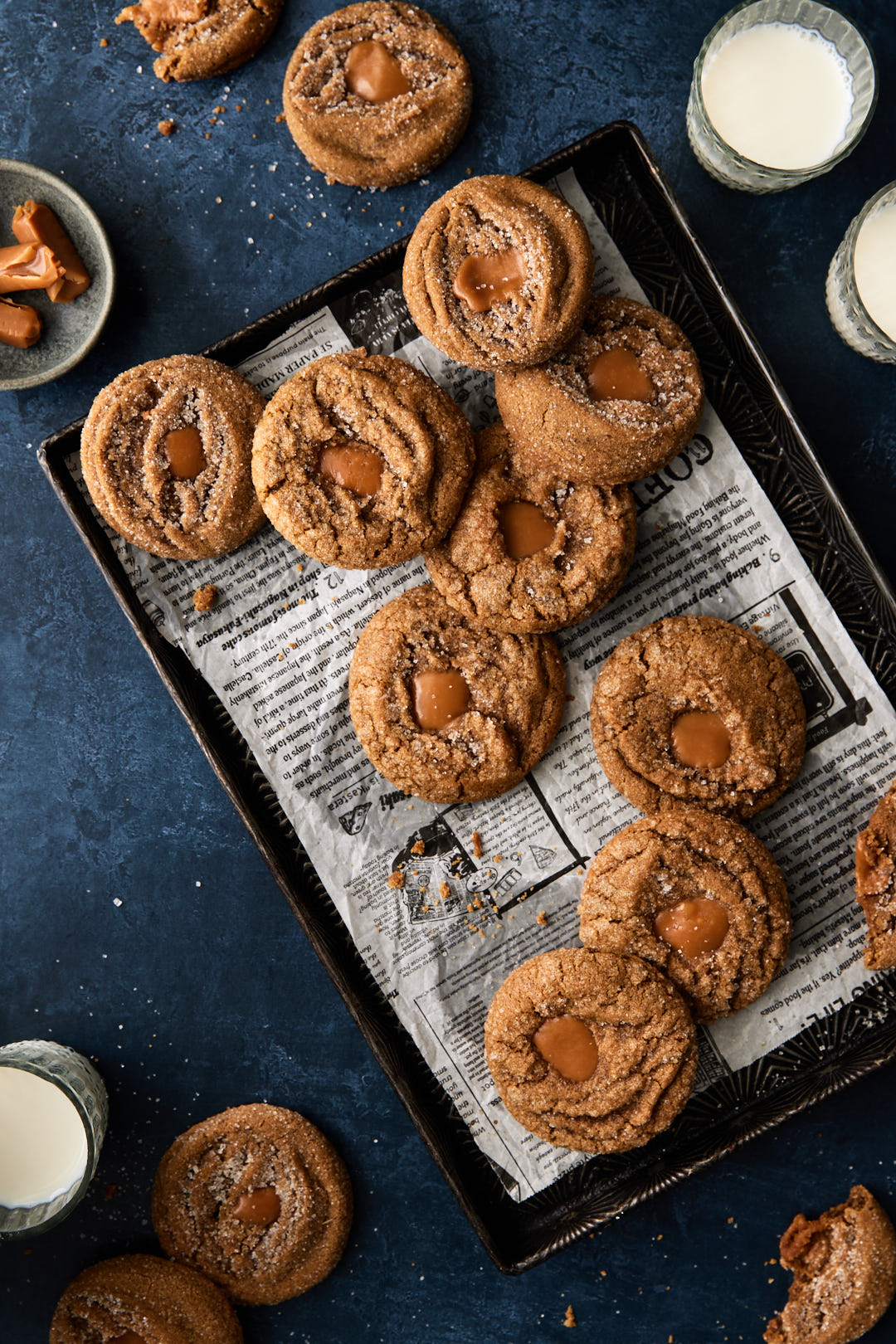
Over the years I have tinkered with the recipe and had the idea to stuff the center of them with some chewy caramel. It took a while to get the right caramel for the stuffing. I first tried Kraft caramels but they hardened after baking and cooking and didn’t give me the chewy center. I made my own caramel, which was outstanding, but way too much work. Then I tried Werther’s Original Chewy Caramels. They stay chewy even after the cookies cool. I also put them through the freezer test and once thawed, the caramel stays chewy.
Check out this video to see how they come together.
Here are a few tips to ensure success:
Use a cookie scoop to ensure consistent size and even baking. I use this one. It has a one ounce (2 Tablespoon) capacity.
Spray your measuring cup with a bit of non-stick cooking spray before measuring and pouring the molasses. It will glide right out. You can do this for measuring anything sticky, like peanut butter or honey.
Roll the scoped cookies in coarse sanding sugar. The texture of the coarse sugar is what gives the cookies their characteristic crinkle top. If you’re in Canada, Bulk Barn carries it.
The Werther’s caramels are rectangular shaped. Before stuffing the cookies, twist them so they are more circular in shape. This will prevent oozing.
I like to top each cookie with additional caramel to give a visual cue as to what type of cookie you will be eating. After a bit of experimenting, I found that about 1/3 of a caramel, placed on top, halfway through the baking time, yielded the best results. A sharp scissors was best for cutting the caramels.
As soon as the cookies come out of the oven, use a round cookie cutter, larger than the cookies, to give a little “scoot” to even out the shape and have picture perfect round cookies. I learned this trick from Erin over at cloudykitchen.